Understanding Professional Cleanup Equipment and PPE
Biohazard cleanup crews wear personal protective equipment (PPE) such as gloves, fluid-resistant suits, eye and face protection and, when needed, respirators, because blood and some other bodily fluids can carry infections. Federal workplace rules from OSHA set out when that equipment must be used and how workers must be trained.
Seeing people in protective suits at your home can be unsettling. This guide explains, without technical overload, what each item is for, what the rules say, which tools are typically involved, and why none of it means your family is in danger once the work is finished.
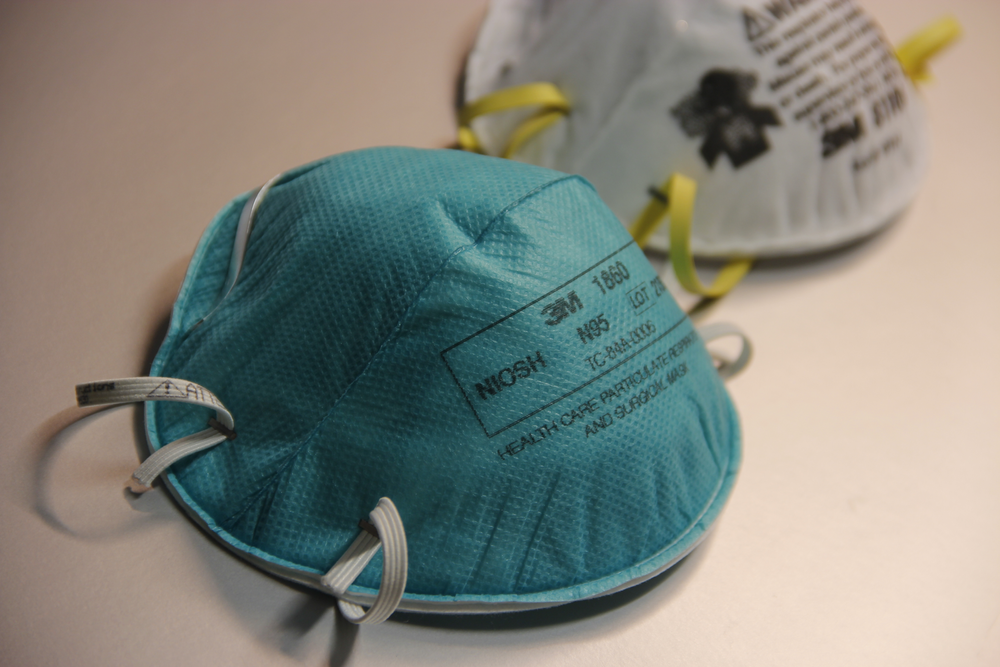
Photo: Debora Cartagena, CDC, public domain, via Wikimedia Commons
Why cleanup crews wear protective gear
The short answer is that blood can carry disease. The CDC identifies hepatitis B, hepatitis C and HIV as bloodborne pathogens, and lists contact with blood or other body fluids, splashes to the eyes, nose or mouth, and cuts or punctures from sharp objects as ways exposure can happen.
Cleanup work brings people into close, repeated contact with exactly those materials. Workers kneel on contaminated flooring, cut out soaked carpet and padding, lift furniture and handle debris that may hide broken glass. PPE puts a barrier between the worker and that material for the whole shift.
The gear also protects your property. A worker in a disposable suit and shoe covers who removes that layer before leaving the work area is far less likely to carry contamination into hallways, other rooms or vehicles. In that sense PPE is as much about the house as about the person wearing it.
A calm way to think about it
Protective equipment reflects the level of contact a worker has, hour after hour. It is not a signal that your home is permanently unsafe. Once contaminated materials are removed and surfaces are disinfected, the reason for the gear is gone.
What OSHA requires of employers
Three federal standards from the Occupational Safety and Health Administration shape how cleanup employers approach protective equipment. They apply to employers and their employees, not to homeowners.
General PPE requirements: 29 CFR 1910.132
This standard requires employers to assess the workplace for hazards, select equipment that protects against them, make sure it fits each worker, and document that hazard assessment in writing. Employers must provide required PPE at no cost to employees, keep it in sanitary and reliable condition, and never allow defective or damaged equipment to be used. Workers must be trained on when PPE is needed, what to wear, how to put it on and take it off, its limits, and how to care for and dispose of it.
Respiratory protection: 29 CFR 1910.134
When respirators are required, the employer needs a written respiratory protection program with worksite-specific procedures. Workers must have a medical evaluation before they are fit tested or required to use a respirator, must pass a fit test before first using a tight-fitting respirator, and must be retested at least annually. Training must happen before use and recur every year.
Bloodborne pathogens: 29 CFR 1910.1030
This is the standard most closely tied to biohazard cleanup. It requires employers with occupationally exposed employees to have an exposure control plan, use engineering and work practice controls first, and provide appropriate PPE when exposure remains. It defines PPE as appropriate only if it does not let blood or other potentially infectious materials reach the worker's clothes, skin, eyes or mouth under normal use.
If you want to ask a cleanup company about any of this, the questions to ask before hiring a biohazard cleanup company include simple ways to phrase it.
Gloves and hand protection
Gloves are the most basic piece of PPE and the one used most. The bloodborne pathogens standard says gloves must be worn when hand contact with blood or other potentially infectious materials can reasonably be anticipated, and that disposable single-use gloves must not be washed or reused.
In practice, crews often wear more than one layer:
- Inner disposable gloves, usually nitrile, as a close-fitting barrier.
- Outer gloves that are thicker or cut-resistant when handling debris, tack strip, broken glass or rough subfloor.
- Taped or sealed cuffs where gloves meet the suit sleeve, so fluid cannot run inside.
Gloves are changed whenever they tear, become heavily soiled, or a worker moves from a contaminated task to a clean one. OSHA also requires workers to wash their hands as soon as feasible after removing gloves. That simple habit is one of the strongest protections in the whole process.
Suits, shoe covers and body protection
The white or colored coveralls people associate with this work are there to keep fluids off skin and street clothing. OSHA's bloodborne pathogens standard lists gowns and similar protective clothing among PPE, and calls for surgical caps or hoods and shoe covers or boots when gross contamination can reasonably be anticipated.
| Item | What it does |
|---|---|
| Fluid-resistant coverall | Keeps liquids and particles off clothing and skin. Usually disposable. |
| Hood | Covers hair and the neck line, where splashes and dust can collect. |
| Shoe covers or boots | Stop contamination being tracked out of the work area on footwear. |
| Knee protection | Lets workers kneel on flooring without pressing contaminated fluid through the suit. |
Suits are removed before leaving the work area. OSHA requires that all PPE be removed before leaving the work area and placed in a designated area or container for storage, washing, decontamination or disposal. That is why you may see a crew set up a specific spot near the doorway for taking gear off. The guide on how cleanup teams manage access and containment explains that setup in more detail.
Eye and face protection
Eyes, nose and mouth are mucous membranes, which is why splashes to the face count as an exposure. The bloodborne pathogens standard requires masks combined with eye protection, such as goggles or glasses with solid side shields, or chin-length face shields, whenever splashes, spray, spatter or droplets can reasonably be anticipated.
Cleanup tasks that can create splashes include lifting saturated materials, cutting flooring, and applying cleaning solutions to vertical surfaces. Crews often wear sealed goggles or a full-face respirator that covers the eyes as well as the nose and mouth.
The same standard also requires procedures that minimize splashing, spraying and spattering in the first place. Good technique, such as working from the outside of a contaminated area inward and avoiding high-pressure spraying on soiled surfaces, reduces the need for face protection to do all the work.
Respirators and what they protect against
Not every job calls for a respirator, but many do. A respirator may be used when cutting or removing dried material that can create dust, when working with cleaning chemicals whose labels call for respiratory protection, or in spaces where decomposition has affected the air.
Common types
- Filtering facepiece respirators, such as N95 models, filter particles. NIOSH explains that in testing an N95 must not let more than 5 percent of test particles through.
- Half-face or full-face elastomeric respirators use replaceable cartridges or filters. The correct cartridge depends on the hazard, which is why the hazard assessment comes first.
- Powered air-purifying respirators use a small blower to push filtered air into a hood or facepiece. They are used in some heavier jobs.
Why fit and approval matter
NIOSH is the federal agency that tests and approves respirators for U.S. workplaces. Approved respirators carry a NIOSH approval number that begins with TC, such as TC-84A followed by more digits, on the label or packaging. Even an approved respirator only works if it seals to the wearer's face, which is why OSHA requires fit testing before first use and at least annually after that, and again if something like a significant change in weight could affect the fit.
Respirators do not remove the source of an odor. They protect the worker while the source is being removed. Our guide on biohazard remediation and odor concerns explains why odor control depends on what is taken out of the space.
Tools and equipment you might see
Beyond PPE, crews bring equipment for removing, containing and disinfecting. The exact kit depends on the job, but these are the general categories:
- Removal toolsUtility knives, pry bars, saws and scrapers for cutting out carpet, pad, drywall or subfloor sections that cannot be cleaned
- Containment materialsPlastic sheeting, tape, floor protection and zip-door style barriers that separate the work area from the rest of the property
- Inspection aidsLighting, moisture meters and similar tools that help find where fluids traveled under or behind surfaces
- Cleaning and disinfection suppliesSprayers, wipes, brushes and EPA-registered disinfectants applied according to label directions
Mechanical tools also handle sharps safely. OSHA says contaminated broken glass must not be picked up directly by hand and should be removed with a brush and dust pan, tongs or forceps. That rule explains why crews pick through debris carefully rather than gathering it up quickly.
Waste containers
Contaminated materials go into containers that are closable, built to prevent leaks, and labeled with the biohazard symbol or color-coded, as the bloodborne pathogens standard requires for regulated waste. You may see red bags or labeled boxes carried out. That packaging is part of disposing of material in line with applicable Tennessee and federal requirements.
Disinfectants and chemical safety
After contaminated materials are removed, remaining surfaces are cleaned and then disinfected. The EPA registers disinfectants and says each product should be used according to its label directions. One of the most important of those directions is contact time: the time a surface must stay visibly wet for the product to work. If a product dries before the contact time is up, it may need to be applied again.
This is a good example of why the process is slower than many people expect. Disinfection is not a quick wipe. It is a sequence: remove visible material, clean the surface, then apply the disinfectant and let it sit for the time the label specifies.
Cleaning chemicals bring their own hazards, which is another reason for gloves, eye protection and sometimes respirators. OSHA's Hazard Communication Standard, 29 CFR 1910.1200, requires labels and safety data sheets for hazardous chemicals and training so workers understand them.
Please do not mix products at home
Combining household cleaners, especially bleach with ammonia or acids, can release harmful gases. If you are tempted to tackle an affected area yourself, the guide on the limits of household cleaning explains where a household approach stops being appropriate.
Putting gear on and taking it off
OSHA's PPE standard lists how to properly put on, take off, adjust and wear PPE as a required training topic. Taking gear off is the step where self-contamination most often happens, because the outside of the suit and gloves is the dirtiest surface in the room.
A typical sequence looks like this, though each employer sets its own procedure:
Check gear before entering
Workers inspect suits, gloves and respirators for tears or defects. OSHA says damaged PPE must not be used.
Dress in a clean area
Inner gloves, suit, shoe covers, respirator, eye protection, hood and outer gloves go on away from the contaminated space.
Work, then step out to a removal point
Before leaving the work area, workers move to a designated spot, often on plastic sheeting near the exit.
Remove outer layers carefully
Outer gloves and the suit are peeled away so the contaminated side folds inward, then placed in a waste container.
Remove face gear and inner gloves last
Eye protection and respirators are removed by the straps. Inner gloves come off last, followed by hand washing.
This routine may happen many times on one job, every time a worker leaves for a break, to carry waste, or at the end of the day.
How the gear changes from one job to another
There is no single uniform for every call. The hazard assessment OSHA requires is what drives the choice, so two jobs a week apart can look quite different.
| Situation | What usually shifts |
|---|---|
| A contained blood spill on hard flooring after an injury | Gloves, eye protection and a suit or gown may be enough, with a short work time and little demolition. |
| Fluids that soaked into carpet, pad and subfloor | Heavier gloves, knee protection and shoe covers matter more because of cutting and kneeling. A respirator may be added for dust. |
| A death that was not discovered for some time | Respiratory protection and full-body coverage are more likely, and work may be organized in shorter shifts. |
| A vehicle interior | Tight spaces make face protection and careful glove changes important when reaching under seats and into seams. |
These are general patterns, not rules. The point is that equipment follows the hazard, which is why a company should be able to explain its choices for your specific property. You can read more about each setting on our decomposition cleanup and vehicle biohazard cleanup pages.
Common misconceptions about PPE
"If they need a suit, my whole house must be dangerous"
Not usually. The gear matches the work done in the affected area. Other rooms that were not exposed are often unaffected, and containment helps keep them that way.
"A mask from the hardware store is enough for me to clean it"
A paper dust mask is not a fitted respirator, and a respirator alone does not address skin and eye contact or the handling of contaminated waste. Professional work relies on the whole system of training, equipment, technique and disposal.
"More gear always means better work"
PPE is the last line of defense, not the first. OSHA requires engineering and work practice controls first, with PPE added where exposure remains. Careful methods matter as much as what someone wears.
"The crew is wearing a suit because they think someone was sick"
Crews treat all blood and bodily fluids as potentially infectious. It is a standard precaution, not a judgment about the person who was hurt or who died.
What this means for you on the day
If you are at the property when the crew arrives, here is what you might notice and why:
- Workers may dress outside or in a garage or entryway, so they put on clean gear away from the affected room.
- Plastic sheeting and a marked area by a door may appear. That is where gear is removed and waste is staged.
- Sealed, labeled containers will be carried out to a vehicle rather than to your trash bins.
- You will be asked to stay out of the work area. That is for your safety and keeps contamination contained.
If seeing protective suits is distressing, it is fine to wait elsewhere and ask for updates by phone. Many families prefer not to watch. Our pages on residential crime scene cleanup, death scene cleanup in homes and workplace biohazard cleanup describe what a visit looks like in each setting.
Nashville 24/7 Biohazard Disposals works as one team that travels from Nashville across Middle Tennessee. If you have questions about what the crew will bring or wear at your property, ask when you call or see our service areas and contact page.
The essentials in a few lines
- Blood and some bodily fluids can carry hepatitis B, hepatitis C and HIV, so cleanup workers use barriers between themselves and that material.
- OSHA standards 1910.132, 1910.134 and 1910.1030 require employers to assess hazards, provide PPE at no cost, fit test respirator users and train workers.
- Gloves, fluid-resistant suits, eye and face protection and, when needed, respirators each block a different route of exposure.
- Tools are chosen for safe removal, containment, inspection and disinfection, and waste goes into closable, leak-resistant, labeled containers.
- Disinfectants are EPA-registered and work only when applied according to the label, including contact time.
- Gear on the crew does not mean your home stays unsafe. It reflects the close contact of the work itself.
To see how this equipment fits into the whole job, read what professional crime scene cleanup involves or understanding blood cleanup and biological contamination.
Questions people ask
Do I need to wear PPE if I go into the house after cleanup is finished?
Generally no. Once contaminated materials have been removed and surfaces disinfected, normal use of the space can resume. If rebuilding is still needed, a contractor may have their own safety practices for construction work.
Is an N95 the same as a respirator?
An N95 is one type of respirator, called a filtering facepiece respirator. It filters particles and must seal to the face to work as designed. It is not designed for every hazard, and the right respirator depends on what a hazard assessment finds.
Why does the crew throw away their suits instead of washing them?
Most suits and gloves used in this work are disposable. OSHA specifically says disposable single-use gloves must not be washed or reused. Disposing of the outer layers after each use avoids carrying contamination back into a vehicle or another home.
Can I borrow protective gear and clean a small spot myself?
For a very small spill on a hard, non-porous surface, a household can follow CDC and public-health guidance. For anything larger, anything that has soaked into carpet, upholstery or wood, or anything that is emotionally hard to face, protective gear alone is not enough. Please keep people and pets away and call a professional.
Will the workers' equipment damage my floors or walls?
Crews usually protect unaffected surfaces with floor coverings and sheeting. Removing contaminated materials does mean cutting out affected carpet, pad or drywall sections, which you will see described in the written scope before work starts.
Do cleanup workers get vaccinated?
Under OSHA's bloodborne pathogens standard, employers must make the hepatitis B vaccination series available to employees with occupational exposure, generally within 10 working days of initial assignment, unless an exception applies. Workers may decline, and the standard sets out how that is documented.
What happens to the used PPE?
Used disposable PPE that is contaminated goes into the same closable, labeled or color-coded containers as other contaminated material, and is disposed of in line with applicable Tennessee and federal requirements.
Sources
- OSHA Personal Protective Equipment, General Requirements (29 CFR 1910.132)
- OSHA Respiratory Protection Standard (29 CFR 1910.134)
- OSHA Bloodborne Pathogens Standard (29 CFR 1910.1030)
- NIOSH: Approved respirators
- CDC/NIOSH: Bloodborne infectious diseases
- EPA: Selected EPA-registered disinfectants
- OSHA Hazard Communication (29 CFR 1910.1200)
Questions about how we protect your home
If you would like to know what our crew will wear and bring to your property, call (615) 513-5112. We can walk you through it before anyone arrives.