Multi-Room Blood Cleanup
When someone is hurt, they rarely stay in one place. They walk to the bathroom, go looking for a phone, or are helped down the stairs to the front door. That means blood can end up in several rooms and on surfaces nobody thinks to check, like light switches, stair rails and the inside edge of a door.
This page explains how we trace that path, why each surface is assessed on its own terms, and how a multi-room job is planned so that clean rooms stay clean.
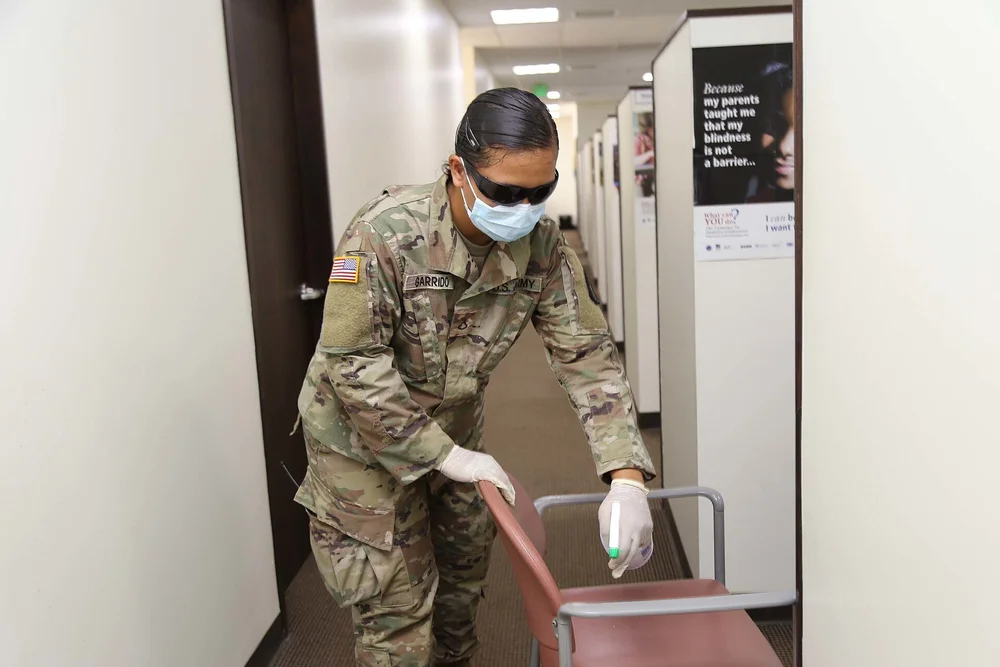
Photo: The National Guard, public domain, via Wikimedia Commons
How blood travels through a home
Spread usually follows a story. An injured person moves from where they were hurt toward help. Family members or paramedics move in, then back out. Each trip can carry blood on hands, shoes, clothing and equipment. Typical routes we trace:
- A bedroom to a bathroom, often with contact on the door, the light switch, the sink and the towel bar.
- Down a staircase, where the handrail, the carpeted treads and the wall at hand height all pick up traces.
- Through a kitchen to a phone or a first-aid kit, including drawer pulls and cabinet fronts.
- Out through an entry hall to the front door, porch and sometimes a car.
Some of those marks are obvious. Others are small, dried, or on dark surfaces where they are easy to miss. A home can look mostly fine to a worried family member while still holding traces in five or six places.
Why every surface gets its own assessment
A multi-room job is really a collection of small jobs on different materials. A single cleaning method won't fit all of them. A few examples:
| Surface | What we check | Usual approach |
|---|---|---|
| Stair carpet | Whether fluid reached the pad and the tread edge | Remove affected treads' carpet and pad; treat the wood beneath |
| Handrail and balusters | Hand contact along the length, joints and brackets | Clean and disinfect the full length |
| Painted door frames | Hand marks at latch height, edges and hinges | Clean and disinfect; repaint later if the finish is marked |
| Switches and outlets | Covers and gaps around them | Remove covers, clean behind, disinfect |
| Hardwood and laminate | Seams between boards where fluid can run in | Clean and disinfect; flag boards that may need a contractor |
| Bathroom fixtures | Sink, faucet, tub edge, grout | Clean and disinfect, with attention to grout |
Our guide to how professionals assess rooms and materials covers the decision-making in more detail.
How we plan a multi-room job
The risk in a job like this is carrying contamination from a dirty area into a clean one. So the work follows an order.
Walk the route
We trace the path from start to finish, marking each affected spot, and talk with you about what happened so we don't miss a stop along the way.
Set up containment
Where it's needed, we close off work areas and lay protective covering on walkways we'll use, so traffic doesn't spread anything. Our guide to access and containment explains this.
Work from the outer edges in
Lightly affected areas are usually done first, then the heavier areas, so we aren't walking back through finished rooms.
Remove porous materials
Stair carpet, rugs and pad that absorbed blood are cut out and packaged in the room where they are.
Clean and disinfect each surface
We use EPA-registered disinfectants according to label directions on every surface on the list, including the small ones.
Final walk-through
We walk the whole route again, then show you or send you photos of each area.
Keeping it contained until we get there
The most useful thing you can do is limit traffic. If you can, use one route through the house that avoids the affected areas, and keep pets confined. Don't vacuum the stairs or hallway, because that can spread dried residue. Leave doors and switches as they are rather than wiping them down. If you plan to talk to your insurer, take photos first.
If someone was taken to hospital, our page on blood cleanup after a traumatic injury explains how families arrange the work from there.
Who usually calls about multi-room blood
Most often it's a spouse or adult child after an accident or medical emergency at home. We also hear from landlords and property managers who discover the extent of an incident during a unit inspection, and from people who have bought or inherited a home and found staining in several places. Landlords may find blood cleanup in rental properties more relevant.
Multi-room blood cleanup versus other multi-room pages
We have several pages with "multi-room" in the name because the situations behind them are very different. This one is for blood spread by an injury or medical event where nobody died and no crime is involved. If the spread happened during a crime, see multi-room crime scene cleanup. If several types of contamination are involved across a property, multi-room biohazard remediation may fit better. For a single room, our main blood cleanup page is the place to start.
Scope, cost and travel
The number of rooms is only part of the picture. Scope also depends on how many separate surfaces are affected, whether carpet or stair runners need removal, how long the blood has been there, how easy the access is and how much waste comes out. We put all of that in a written scope before we begin. Some property insurance policies may cover part of the work; we can provide photos, the scope and an itemized invoice for your insurer to review. The multi-room biohazard cleanup guide has more on planning bigger jobs.
Our one team travels out from Nashville to homes across Middle Tennessee, including Williamson County and Rutherford County. Scheduling is confirmed by phone; see all service areas.
Questions people ask
How do you find traces we can't see?
By following the route the person and helpers took, using strong low-angle lighting, and checking the places hands and feet usually touch: switches, handles, rails and door edges. Knowing the story of what happened helps us look in the right places.
Do you have to remove all the carpet on the stairs?
Not necessarily. We remove what's affected and check the edges. Some families choose to replace the whole runner afterward so it matches, but that is a decision for you and your flooring contractor.
Can we keep living in the house during the cleanup?
Often, yes. We work in sections and keep a clear route for you through the house. If the affected areas include the only bathroom or the only stairs, we'll talk about timing and what's practical.
Will the walls need repainting?
Sometimes. Cleaning and disinfecting can dull some paint finishes or leave a visible patch. Repainting is generally a job for a painter or contractor, and we'll point out where it may be needed.
Paramedics walked through the house. Does that matter?
It can. Emergency crews work quickly and rightly focus on the patient, so boots, equipment and stretchers can carry traces along hallways, across thresholds and onto the front steps. We include their likely route in our walk-through. Tell us where they came in and how they left, and we'll check those floors and door frames too.
Is a multi-room job done in one visit?
Many are. Larger homes, heavy carpet removal or difficult access can mean more than one visit. The written scope will say what we expect.
Sources
Tell us the route and we'll take it from there
Call (615) 513-5112 and walk us through which rooms were affected. We'll help you work out what needs attention and plan the cleanup with you.