Biological Contamination Cleanup
Biological contamination means surfaces carrying material that came from a person, such as blood, bodily fluids or tissue, in amounts or places that ordinary cleaning can't safely deal with. Sometimes it's one room after a clear event. Sometimes it's harder to pin down: an odor nobody can trace, a property left in poor condition, or a space where several incidents have built up.
This page explains how we work out the extent, what we clean and remove, and which related problems, such as mold and sewage, belong with a different trade.
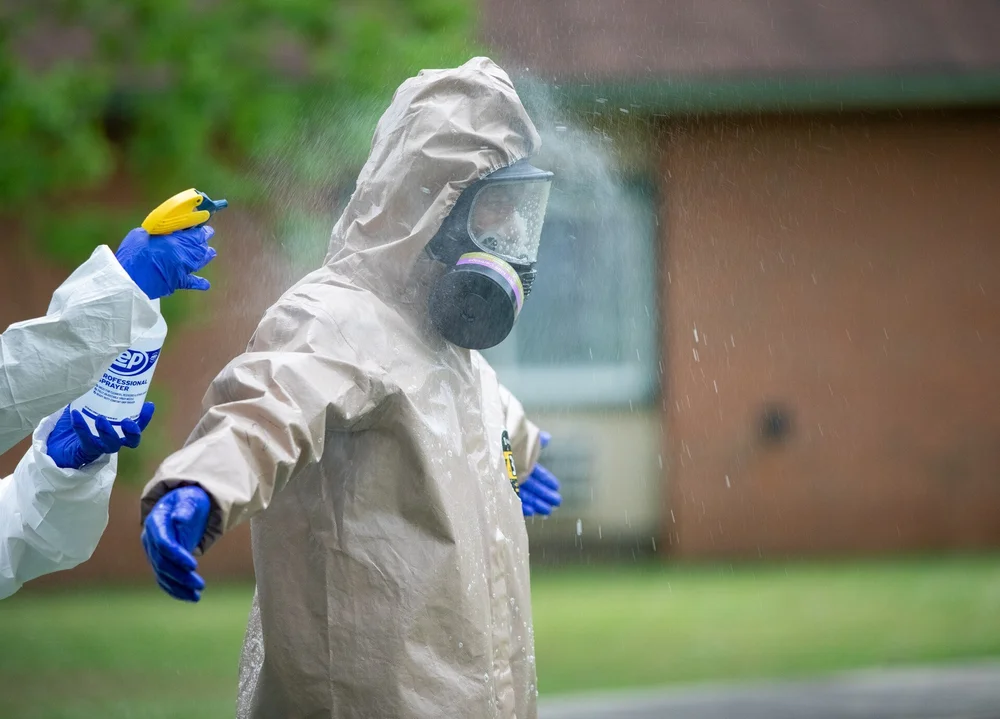
Photo: The National Guard, public domain, via Wikimedia Commons
What counts as biological contamination
We use the term for contamination from human sources. It's broader than a single blood spill and narrower than everything a restoration company deals with. It typically includes:
- Blood and bodily fluids spread across several surfaces or materials.
- Contamination that built up over time in a home where someone was unwell or unable to manage.
- Areas used by someone who was seriously ill, after they have moved to hospital or care.
- Public or shared spaces where an incident affected floors, furniture or fixtures.
Each of these has a more focused page. For a specific fluid, bodily-fluid cleanup is more detailed. For stains found later, see dried blood cleanup. This page is for situations where the extent itself is the main question.
Where biohazard cleanup ends and restoration begins
People sometimes call us about problems that look similar but need a different specialist. Being clear about this saves you time and money.
Work we take on
- Blood, vomit, urine, feces and other human bodily fluids
- Removal of porous materials those fluids have soaked into
- Cleaning and disinfection of affected hard surfaces
- Deodorizing once the source has been removed
- Packaging and disposal of contaminated material
Usually another trade
- Mold growth from leaks or humidity
- Sewage backups and plumbing overflows
- Flood and water damage drying
- Rebuilding walls, floors and finishes
- Pest infestations
If an event involves both, for example a medical emergency in a bathroom that also flooded, we can handle the biological part and tell you which other trade to bring in. Our guide on biohazard cleanup versus standard restoration explains the difference in more depth.
How we assess the extent
For this kind of job, the assessment is where most of the thinking happens. We're looking for the boundary between contaminated and clean, room by room and material by material.
- History. What happened, when, and who has been in the space since. Foot traffic often explains where contamination has traveled.
- Visible signs. Staining, residue and damage, checked under strong lighting.
- Hidden areas. Under flooring, behind trim and fixtures, inside furniture, and around HVAC returns near the affected area.
- Odor. Smell often leads us to contamination that isn't visible yet.
- Materials. Whether each affected item is porous, semi-porous or non-porous, which decides whether it can be cleaned or must go.
The result is a written scope listing each area and what we propose for it. Our guide on how a biohazard assessment works walks through this.
The remediation process
Contain
We separate work areas from clean areas and set up a route for bringing out waste.
Remove
Contaminated porous materials are removed and sealed in packaging inside the work area.
Clean
Hard surfaces are cleaned to remove residue, since disinfectants work poorly on dirty surfaces.
Disinfect
We apply EPA-registered disinfectants according to label directions, including the required contact time.
Verify
We re-inspect each area, including the layers exposed by removal.
Document and dispose
Waste is disposed of in line with applicable Tennessee and federal requirements. You receive photos, the scope and an itemized invoice.
Who tends to call about this
Because the problem is often unclear at first, the people who call vary. Adult children clearing a parent's home after a long illness. Property managers who open a unit after a welfare check. Business owners whose staff have reported a smell in a restroom or storage room. Executors preparing a house for sale. Each of them usually asks the same first question: how bad is it, really? The honest answer is that we won't know until we look, but a phone description and a few photos often give us a fair idea of whether it's a small job or a large one.
What happens to the waste
Material contaminated with human fluids isn't ordinary household trash. In Tennessee, medical waste is classed as a "special waste" under state rules and generally can't go to a landfill unless it has been treated to make it non-infectious, according to the Tennessee Department of Environment and Conservation. We package contaminated material on site and dispose of it in line with applicable Tennessee and federal requirements. Our guide on what happens to contaminated porous materials has more on this.
Homes and businesses
In homes
Residential jobs often involve bedding, mattresses, upholstered furniture and carpet. We work around family members where we can, and we ask before removing anything personal. Related pages: residential biohazard cleanup and contaminated furniture assessment.
In businesses
Commercial spaces bring different concerns: staff and customer access, reopening, and employer obligations under the OSHA Bloodborne Pathogens Standard for employees who may be exposed. See blood cleanup in commercial buildings and our specialized remediation assessment for larger or unusual sites.
Before we arrive, and what affects cost
Keep people and pets out of the affected area, close doors, and switch off fans pointed at it if that's easy. Don't throw out contaminated items before speaking to your insurer, and don't try to clean porous materials yourself. The guide what not to do before an assessment explains why.
Cost depends on how far contamination has spread, the materials involved, the number of rooms, access, and waste volume. We'll provide a written scope; we don't publish prices. Some property insurance policies may cover some of this work depending on the policy, and we can provide documentation for your insurer. We travel from Nashville across Middle Tennessee, including Montgomery County and Robertson County; see all service areas.
Questions people ask
How do I know whether I need biohazard cleanup or a restoration company?
If the problem came from a person, such as blood, bodily fluids or illness, start with us. If it came from water, a pipe, a leak or humidity, start with a restoration company. If it's both, call us first and we'll help you sort out the order.
There's a smell but I can't see anything. Can you find the source?
Often, yes. We check under flooring, inside furniture and behind fixtures near where the smell is strongest. If the cause turns out not to be biological, such as a plumbing issue or a dead animal in a wall, we'll tell you so you can call the right trade.
Do you test surfaces in a lab?
We don't send samples to a lab as part of a standard job. Our assessment relies on history, inspection and our judgment about materials. If you need laboratory testing for a specific reason, such as a legal or insurance requirement, let us know and we can talk about it.
Do you clean mold?
No. Mold remediation is a separate specialty. If we find mold during a job, we'll point it out so you can bring in someone who handles it.
Can contaminated electronics be saved?
Hard outer surfaces can often be cleaned and disinfected. Fluid that got inside a device is harder to deal with and may not be safely recoverable. We'll tell you what we think and leave the decision to you.
Sources
Not sure what you're dealing with?
Call (615) 513-5112. Describe what you see and smell, and we'll help you work out whether it's a job for us or for another trade.

