What Professional Crime Scene Cleanup Involves
Professional crime scene cleanup is the work of removing blood, bodily fluids and other biological material from a property after police and, when someone has died, the medical examiner have finished and released the scene. It covers safe removal of contaminated materials, cleaning and disinfection of what can be saved, and proper disposal of what cannot.
It is not police work, evidence collection or rebuilding. This guide explains who handles each part, the phases a cleanup moves through, what is usually included, where the limits are, and how to get help from Nashville 24/7 Biohazard Disposals when you need it.
If anyone is hurt or still in danger, call 911 first. If you are dealing with violence at home, the National Domestic Violence Hotline is available at 1-800-799-7233.
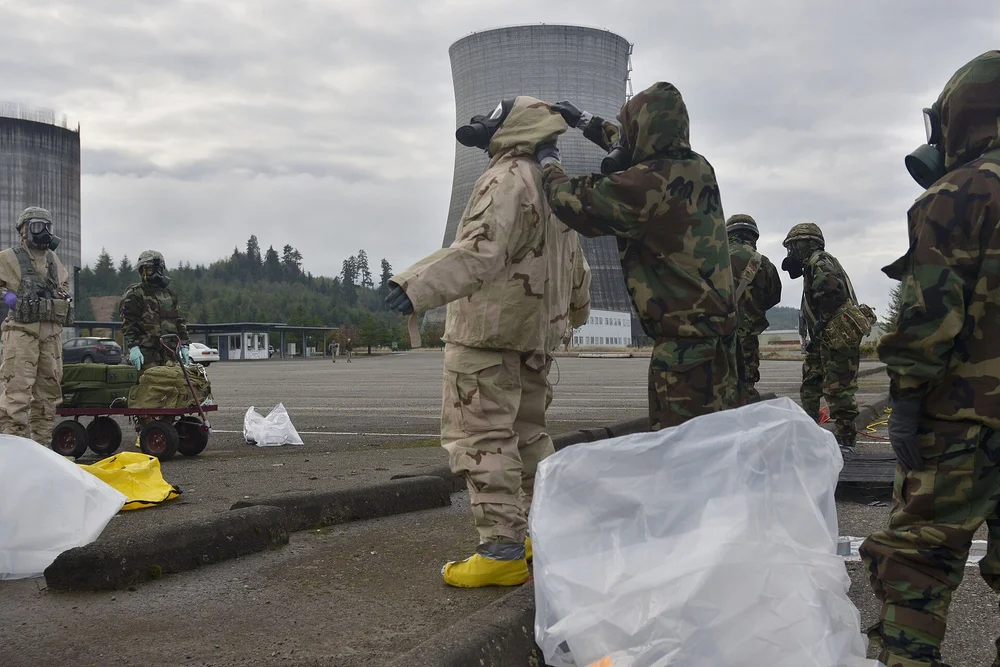
Photo: Sgt. Adam Keith, U.S. Army, public domain, via Wikimedia Commons
Crime scene cleanup, defined in plain terms
The phrase sounds dramatic, but the work itself is practical. After a violent crime or a death that police investigate, a home or business can be left with blood and other bodily fluids on floors, furniture, walls and fixtures. Some of it is visible. Some has soaked into carpet pad, mattresses, upholstery or the gaps between floorboards. Crime scene cleanup is the process of finding all of that material, removing it safely, and leaving the area clean, disinfected and ready for the next step, whether that is living there again, renting the unit, or bringing in a contractor for repairs.
You may also see it called trauma scene cleanup, biohazard remediation or forensic cleaning. The names overlap. On this site, crime scene cleanup refers to situations where a crime or police investigation was involved, while traumatic incident cleanup covers accidents and injuries where no crime is suspected. The methods are much the same. What differs is the paperwork, the timing around police release, and sometimes the emotional weight for the people involved.
Why the word "biohazard" comes up
Blood can carry bloodborne pathogens such as hepatitis B, hepatitis C and HIV, according to the CDC and OSHA. That is the health reason this work is treated differently from ordinary cleaning. It does not mean every scene is dangerous to walk past. It means anyone handling the material should be trained, protected and following a method designed to keep contamination from spreading.
Who is responsible for which part
Many people are surprised to learn that police do not clean up after an investigation, and neither does the medical examiner. Each party at a scene has a narrow job. Knowing those roles helps you understand why the cleanup happens when it does and who you should be talking to at each stage.
| Who | Their role | What they do not do |
|---|---|---|
| Police or sheriff's office | Secure the scene, investigate, collect evidence, decide when the scene is released | Clean, remove contaminated materials or make repairs |
| County medical examiner | Investigate deaths that are sudden, traumatic, suspicious or unexplained; arrange transport of the person who died | Clean the property or advise on what to keep |
| Property owner, tenant, family or manager | Decide who to hire, give access, talk to the insurer, make decisions about belongings | Need to handle biological material themselves |
| Cleanup company | Assess, remove and dispose of contaminated material, clean and disinfect, document the work | Investigate, collect evidence or rebuild |
| Contractor | Replace drywall, flooring, trim and paint after removal | Handle biohazard material that has not yet been removed |
In practice, the person who calls us is usually whoever controls the property: a homeowner, an adult child of the owner, a landlord, a property manager or a business owner. You do not need permission from police to hire someone, but you do need the scene released before any work begins.
Why nothing starts until the scene is released
While a scene is under investigation, it belongs to the investigators. Moving items, wiping surfaces or removing carpet could interfere with evidence, and a cleanup company that entered too early could create real problems for a case. That is why a reputable company will ask, early in the first call, whether police and the medical examiner have released the property.
Release can come quickly or take longer, depending on the investigation. There is no standard timeline, and it is reasonable to ask the officer or detective you are in contact with when the property is expected to be released and whether any rooms remain off limits. Once you have that answer, you can schedule an assessment. If you are not sure, tell us what you know and we can help you work out the right questions to ask.
What you can safely do while you wait
Keep people and pets out of the affected rooms. Close doors where you can. If it is easy to do, avoid running fans or the HVAC system in a way that pushes air through the area. Do not throw away belongings yet, especially if you plan to speak to an insurer. None of these steps involve touching biological material, and none of them interfere with an investigation.
The phases of a professional cleanup
Every scene is different, but the work generally follows the same order. Each phase exists for a reason, and skipping one usually causes problems later.
First conversation
You call or send a message. We ask where the property is, whether it has been released, roughly which rooms are involved, and who has authority to approve work. We do not need graphic details. Plain answers are enough.
On-site assessment
A technician walks the affected area, traces where contamination travelled, and checks what lies underneath surface stains. The outcome is a written scope describing what will be removed, cleaned and disposed of. Our guide to how a biohazard assessment works explains this step in more depth.
Containment and setup
The work area is separated from the rest of the property so contamination is not tracked through clean rooms. Protective equipment goes on before anyone enters. Our explainer on access and containment covers the reasons behind this.
Removal of gross contamination and porous materials
Visible biological material is removed first. Porous items that have absorbed fluids, such as carpet and pad, mattresses or upholstered furniture, are cut out or bagged whole and packaged for disposal.
Cleaning and disinfection
Non-porous and sealed surfaces are cleaned, then treated with EPA-registered disinfectants used according to label directions, including the contact time the label requires.
Deodorization where needed
Odor is addressed by removing its source first. Additional deodorization is used only where it is needed and safe.
Waste packaging and disposal
Contaminated material is packaged and disposed of in line with applicable Tennessee and federal requirements.
Walk-through and documentation
You see the finished area, and you receive photos, the written scope and an itemized invoice you can share with an insurer or anyone else who needs them.
Deciding what can be cleaned and what has to go
One of the hardest parts for families is learning that some belongings cannot be saved. The decision is based on the material, not on the value of the item.
Usually cleanable
- Sealed hard surfaces such as tile, glass, metal and finished countertops
- Many sealed hard floors, if fluids have not reached the seams or subfloor
- Hard-shell items such as appliances, lamps and some electronics casings
- Hard-bound books or papers that were near but not touched by contamination
Often cannot be saved once soaked
- Carpet and carpet pad in the affected area
- Mattresses and box springs
- Upholstered chairs and sofas
- Unsealed wood, sections of drywall and, sometimes, subfloor
Where an item matters to you, say so. Sentimental pieces can sometimes be partly cleaned, photographed before removal, or set aside for you to make a decision later. You stay in control of those choices. Our guide to contaminated porous materials and the furniture and material assessment service explain how these calls are made.
What a cleanup includes, and where it stops
A clear sense of scope prevents surprises. Here is how the boundary usually falls.
Usually part of the cleanup
- Removal of biological material from affected surfaces
- Removal and packaging of contaminated porous materials, including cut-out sections of carpet, pad, drywall or subfloor where needed
- Cleaning and disinfection of salvageable surfaces and items
- Odor work aimed at the source of contamination
- Packaging and disposal of the waste generated
- Photos, a written scope and an itemized invoice
Usually outside the cleanup
- Repairs and rebuilding, such as new drywall, flooring, paint or trim. These are generally a contractor's job, and we will tell you if your project will need one.
- Damage that is not biological, such as broken windows or doors forced by responders
- General decluttering or cleaning of rooms that were not affected
- Fingerprint powder or chemical residue left by investigators, unless the scope specifically includes it. Ask about this during the assessment.
- Legal, insurance or investigative decisions
If you are unsure whether something is in or out, the written scope should answer it. If it does not, ask before work begins.
How the work changes with the type of property
The principles stay the same, but the practical details depend on where the incident happened.
Owner-occupied homes
Families usually want the work done quietly and want a say in what happens to personal items. Residential crime scene cleanup puts those choices first and keeps the work area contained so the rest of the home stays usable where possible.
Rentals and apartments
A landlord or manager may need to coordinate with a tenant's family, a leasing office and other residents who share walls or hallways. Our landlord's guide covers the owner's side of these decisions.
Businesses
Shops, offices and hotels have staff, customers and operating hours to consider. Commercial crime scene cleanup is often planned around closing times and may include common areas, restrooms or vehicles.
Larger scenes
When an incident moved through several rooms, the job becomes a coordination exercise across spaces. The multi-room cleanup page explains how that is handled.
Common misconceptions about crime scene cleanup
"Police or the city will handle it." They do not. Responsibility falls to the property owner or whoever controls the property.
"If it looks clean, it is clean." Visible surfaces can be wiped while contamination remains in pad, seams or upholstery. Odor that returns weeks later is often a sign that something was missed.
"Bleach takes care of everything." Household products may lighten a stain on a hard surface, but they do not reach material that has soaked in, and using them on a large scene can spread contamination rather than remove it.
"Insurance always pays." Some property policies may cover some of this work, but it depends entirely on the policy and the insurer. Ask your insurer directly. Our insurance questions guide lists what to ask.
"Everything in the room has to be thrown out." Often it does not. Many hard items can be cleaned, and the scope should explain why each removed item is being removed.
"It is the same as hiring a house cleaner." General cleaners are not usually equipped or trained for bloodborne pathogen exposure. Our comparison of crime scene cleanup versus general cleaning sets out the differences.
The safety standards behind the work
No single law spells out how to clean a crime scene, but several official standards shape how responsible companies work.
- OSHA's Bloodborne Pathogens Standard (29 CFR 1910.1030) applies to employers whose workers have occupational exposure to blood or other potentially infectious materials. It requires a written exposure control plan, protective equipment, training, and an offer of hepatitis B vaccination. It also defines decontamination as using physical or chemical means to remove, inactivate or destroy bloodborne pathogens on a surface or item.
- EPA disinfectant labels set the conditions under which a product works, including contact time, which EPA describes as the time the product must remain wet on the surface to be effective.
- Tennessee waste rules treat medical waste as a special waste. TDEC guidance says it is generally prohibited from ordinary solid waste facilities unless treated to be non-infectious, which is why contaminated material is packaged and routed differently from household trash.
These standards are the reason the work involves protective suits, sealed containers and careful sequencing. Our page on equipment and PPE describes the gear in more detail.
Paying for the work and where help may come from
Pricing is based on a written scope after an assessment. The main factors are how far contamination spread, which materials are affected, how many rooms are involved, how easy the property is to access and how much waste is generated. Our pricing page explains these factors without guesswork.
If the incident was a crime in Tennessee, the state's Criminal Injuries Compensation program, run by the Tennessee Department of Treasury, may consider up to $3,000 for cleaning and removal of materials when the crime happened in the victim's home or an eligible relative's home. Repairs and replacement are not covered. The crime generally must be reported to law enforcement within 15 days, claims must generally be filed within two years, and the program pays only after other sources such as insurance. Exceptions exist, so check the Treasury's page or call the program for your situation.
For homeowners and businesses with property insurance, some policies may cover some of this work. We can provide photos, a written scope and an itemized invoice for you to give your insurer. If you want to get on the schedule, the Order Online page involves a $2,000 initial deposit. That deposit is not the final price and does not mean work begins within a set time.
The short version, if you only read one section
Crime scene cleanup begins after police and the medical examiner release the property. A professional assessment finds where contamination actually went, a written scope sets out what will be removed and what can be saved, and the work moves through containment, removal, disinfection, odor control, disposal and documentation. It does not include investigation or rebuilding.
You do not need to touch anything yourself. Keep the area closed, keep belongings until you have spoken to your insurer, and call when you are ready. Nashville 24/7 Biohazard Disposals is based in Nashville and travels throughout the Middle Tennessee counties we serve, including Davidson County and Rutherford County. Our line, (615) 513-5112, takes calls any time, day or night.
Questions people ask
Can I be at the property while the cleanup is happening?
Usually you can be at the property, but not inside the contained work area. Many people prefer to stay elsewhere, and that is fine too. We can walk you through the finished space afterward and send photos if you would rather not be there at all.
Will neighbors know what the cleanup is for?
We aim to work discreetly. Vehicles and equipment are kept as low-key as the job allows, and we do not discuss your situation with anyone you have not authorized. If neighbors ask you, you can simply say a contractor is doing some work.
Do you remove fingerprint powder left by investigators?
It depends on the scope you approve. Fingerprint powder and other investigative residue are not biological, so they are not automatically part of the biohazard work. Mention it during the assessment and it can be written into the scope where it makes sense.
What if I am a tenant and not the owner?
Tell your landlord or property manager about the incident. They typically make the decision about cleanup in the building, although you may still decide what happens to your personal belongings. We can talk with both of you.
Who signs the authorization for the work?
Whoever has authority over the property: the owner, an executor or personal representative for an estate, a landlord, or a business manager with authority to approve work. If you are not sure who that is, tell us the situation and we will help you figure it out.
How do I know whether a quote is reasonable?
A good quote is tied to a written scope that lists the rooms, materials and tasks. Compare scopes, not just totals. Our guide on evaluating a cleanup quote walks through what to look for.
Does the property need to be empty before you arrive?
No. Please do not move things out of the affected area yourself. Unaffected rooms can stay as they are. If something blocks access, mention it on the phone and we will plan around it.
Sources
Talk it through before you decide anything
Call (615) 513-5112 any time to ask questions about a released scene, or use the Order Online page if you are ready to schedule an assessment.

