Blood Cleanup in Nashville, TN
If someone has been hurt or taken ill at home or at work and there is blood left behind, we can clean and disinfect the affected area and remove materials that can't be saved. Most of the calls on this page have nothing to do with a crime. They follow a fall in the bathroom, a deep cut in the garage, a heavy nosebleed, or a medical emergency that ended with an ambulance ride.
This page explains when professional blood cleanup makes sense, what the work involves, how it differs from crime scene cleanup, and what affects the scope. Our phone line is answered day and night at (615) 513-5112.
If anyone is still hurt or in danger, call 911 first. Cleanup can wait until everyone is safe.
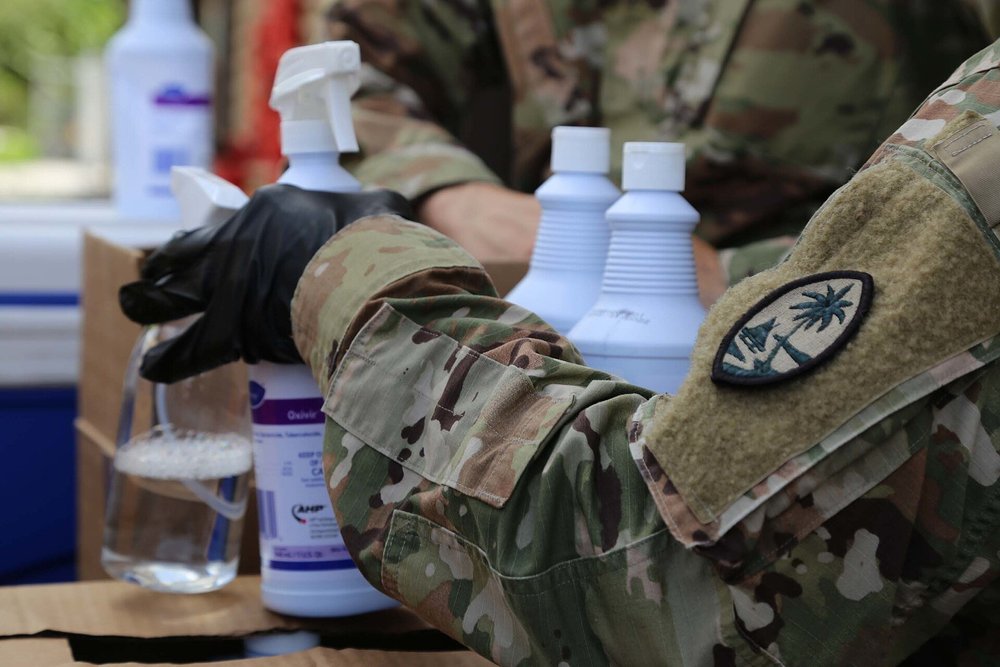
Photo: The National Guard, public domain, via Wikimedia Commons
When blood cleanup is worth a phone call
A drop of blood on a kitchen tile is a household job. Public-health guidance covers small spills on hard, sealed surfaces, and most people handle those without help. The situation changes when the amount is larger, when it has reached something soft or layered, or when the person who has to face it is the one who just watched a loved one get hurt.
People usually call us after one of these:
- A fall. An older parent falls in the night, hits their head and bleeds on the carpet before help arrives.
- An accident with a tool or glass. A table saw, a broken window, a dropped knife. The injured person drove or was driven to the emergency room and the room is as they left it.
- A medical event. Some conditions and treatments can cause sudden, heavy bleeding. Family members often come home from the hospital to find the bedroom or bathroom needs attention.
- Bleeding that went unnoticed. Blood found days later, after it has dried into fabric or wood.
- An incident at a business. A customer or employee injured in a store, office, gym or restaurant, where the space needs to reopen to the public.
Any of these can also involve other bodily fluids. We handle those too, as part of the same visit.
The health reasons, stated calmly
Blood can carry germs that you can't see. The CDC notes that bloodborne pathogens such as hepatitis B, hepatitis C and HIV can be spread through contact with infected blood. That does not mean every spill is dangerous. It does mean blood from another person should be treated as potentially infectious, which is the standard approach in healthcare and in our work.
The practical problem is that blood rarely stays where it lands. It soaks through carpet into the pad and sometimes into the subfloor. It runs into grout lines, under baseboards and into the seams of upholstery. A surface can look clean on top and still hold contamination underneath. Household sprays are also not designed to reach that far down.
Why employers hear about this from OSHA
The federal Bloodborne Pathogens Standard, 29 CFR 1910.1030, applies to employers whose workers have occupational exposure to blood or other potentially infectious materials. It requires things like an exposure control plan, protective equipment, training and an offer of hepatitis B vaccination. A homeowner isn't covered by that rule, but it shows how seriously blood exposure is treated at work. Businesses can read more on our commercial blood cleanup page.
Blood and bodily-fluid services we provide
Each of these pages covers one kind of situation in more depth. Pick the one that sounds closest to yours.
- Dried blood cleanupBlood discovered days or weeks later, set into fabric, wood or grout
- After a traumatic injuryFalls, workshop accidents and other injuries at home while the person is in hospital
- Multi-room blood cleanupWhen an injured person moved through the house, leaving traces on stairs, doors and floors
- Bodily-fluid cleanupVomit, urine, feces and other potentially infectious materials after illness
- Biological contamination cleanupWider contamination of surfaces in homes and businesses, and what we refer to other trades
- Blood cleanup in rental propertiesFor landlords and tenants after an injury or incident in a rental unit
- Blood cleanup in commercial buildingsOffices, shops, restaurants, schools and gyms, including after-hours work
What the assessment looks at
Before we quote, we need to understand what was affected and how far it went. Sometimes we can get a good picture from a phone call and photos. Often we need to see the space. The assessment covers:
- Materials. Hard, sealed surfaces like tile, sealed stone and laminate counters can usually be cleaned and disinfected. Porous materials like carpet, pad, mattresses and fabric furniture often can't be, once blood has soaked in.
- Depth. We check below the visible layer: under carpet, behind baseboards, inside cushions.
- Spread. Footprints, hand marks on door frames, and towels or clothing used during first aid all matter.
- Access. Stairs, tight hallways and parking affect how we bring equipment in and take waste out.
You get a written scope that lists what we plan to clean, what we plan to remove and why. Our guide on how a biohazard assessment works goes into more detail.
How the cleanup works
Talk it through
You call, tell us what happened in whatever words you have, and we ask a few practical questions about rooms, flooring and access. We confirm scheduling for your location by phone.
Set up and protect the space
We wear protective equipment, set up a work zone, and protect unaffected rooms and walkways so nothing is tracked through the house.
Remove what can't be saved
Porous items that are contaminated, such as carpet sections and pad, a mattress, or a fabric chair, are cut out or removed and packaged on site.
Clean and disinfect
Hard surfaces are cleaned first to lift the material, then treated with EPA-registered disinfectants used according to label directions, including the dwell time the label requires.
Check and deodorize
We inspect the area again, including below where material was removed, and address any lingering odor.
Dispose and document
Contaminated material is packaged and disposed of in line with applicable Tennessee and federal requirements. You receive photos, the written scope and an itemized invoice.
If removal leaves a floor or wall that needs rebuilding, that is generally a contractor's job. We'll tell you during the assessment if your project will need one.
What to do while you wait
Helpful
- Keep children and pets out of the area
- Close the door to the room if you can
- Turn off a fan blowing toward the area, if that's easy
- Take a few photos for your records
- Call your insurer before you throw anything away
Better to avoid
- Scrubbing carpet or upholstery, which spreads blood sideways and deeper
- Running a carpet shampooer or steam cleaner over the area
- Bagging up stained items and putting them in the household trash
- Mixing cleaning chemicals
Our guide to the limits of household cleaning explains why well-meant scrubbing often makes the job bigger.
How this differs from crime scene and death cleanup
The cleaning methods overlap, but the situations don't. Blood cleanup on this page usually follows an accident or illness. The person who was hurt is often alive and recovering, and there may be no police report or medical examiner involved.
If blood is the result of a crime, our crime scene blood cleanup page covers the extra steps, including waiting for police to release the scene and Tennessee's crime-victim compensation program. If someone died, see unattended death cleanup or suicide scene cleanup. For an injury that also involved significant damage or several kinds of contamination, our serious injury scene cleanup page may fit better.
Not sure which applies? It doesn't matter much for the first call. Describe what you're looking at and we'll take it from there.
What affects scope and price
We don't publish prices because two blood cleanups can be very different jobs. The written scope is based on:
| Factor | Why it matters |
|---|---|
| Size of the affected area | More square footage means more labor, materials and disinfectant |
| Type of surface | Tile is cleaned; carpet, pad and fabric may need removal |
| Number of rooms | Each room is set up, treated and checked separately |
| How long it sat | Older blood can mean deeper penetration and more removal |
| Access | Stairs, elevators and distance to parking add time |
| Waste volume | Removed material has to be packaged and disposed of properly |
Some property insurance policies may cover some of this work. That depends entirely on your policy and your insurer, so we suggest asking them directly. We can give you photos, the written scope and an itemized invoice to send them. Our page on how pricing works and the guide to insurance questions after a biohazard incident have more.
If you'd rather start online, the Order Online page takes a $2,000 initial deposit. That deposit is not the final price, and it doesn't lock in a particular start time.
Where we work
We are one team based in Nashville and we travel out across Middle Tennessee, including Davidson, Rutherford, Williamson, Sumner, Wilson and Montgomery counties and the surrounding counties. Scheduling for any address is confirmed by phone, and distance can affect timing. See the full service area list, or go straight to Nashville, Murfreesboro or Franklin.
Questions people ask
Is it safe to clean up a small amount of blood myself?
For a small spot on a hard, non-porous surface, a household can usually follow CDC and public-health guidance: gloves, a disposable cloth, and a disinfectant used as the label directs. Professional help makes sense when the amount is larger, when it has soaked into carpet, a mattress or furniture, when it may be hidden, or when you simply don't want to do it. That last reason is a good one.
The person who was hurt is still in the hospital. Can we arrange cleanup without them?
Yes. A family member, the property owner or someone else with permission to enter can arrange the work. We'll need to know who can let us in and who should receive the scope and invoice.
Can blood be fully removed from carpet?
Sometimes the surface stain can be lifted, but blood that has reached the pad usually can't be cleaned to a standard we'd stand behind. In most cases we cut out the affected carpet and pad, check the subfloor and treat it. Our guide on contaminated porous materials explains the reasoning.
Do you only handle blood, or other fluids too?
We also handle vomit, urine, feces and other bodily fluids, often in the same visit. See bodily-fluid biohazard cleanup for details.
Will neighbors know what happened?
We keep the conversation about your situation between us and you. We're happy to talk about how and where we park and bring materials in and out if discretion matters to you.
How do I get a quote?
Call (615) 513-5112 or use the contact page. We'll ask what happened, which rooms and surfaces are involved, and whether photos are possible. From there we either give you a scope or arrange an in-person assessment.
Sources
Talk to someone about the cleanup
Call (615) 513-5112 at any hour. Tell us what happened and we'll explain what the cleanup would involve and what happens next.