Gunshot Suicide Scene Cleanup
When a loved one has died by suicide involving a firearm, the cleanup is something no family should take on alone. These situations often affect more of a room than is obvious at first glance, including ceilings, upper walls and fabrics. A careful professional assessment is how we make sure nothing is missed.
This page explains why that is, what the assessment covers, who is responsible for the firearm, and how the work is carried out without adding to what you are already going through.
If you are thinking about suicide or worried about someone else, please call or text 988 or chat at 988lifeline.org to reach the 988 Suicide & Crisis Lifeline. If there is a firearm in the home and you feel unsafe, asking someone you trust to hold it for a while can help.
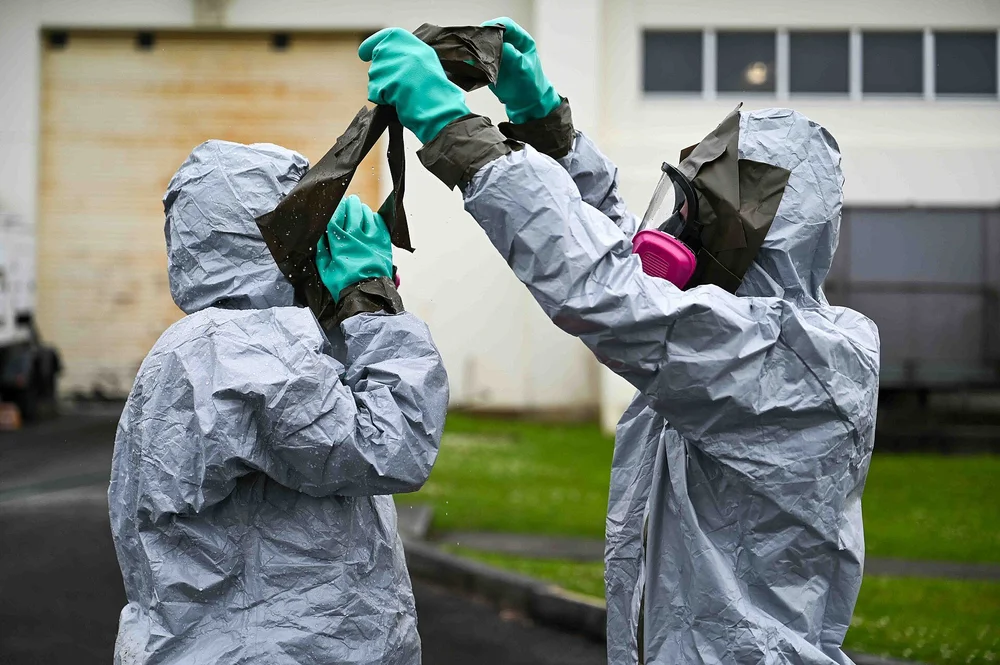
Photo: U.S. Air Force, public domain, via Wikimedia Commons
The firearm is handled by law enforcement
We do not touch, move, store or dispose of firearms or ammunition. Responding officers normally take the firearm as part of their investigation. If you find a firearm or ammunition in the property after it has been released, do not handle it; contact the law enforcement agency that responded and ask them what to do.
Questions about when or whether a firearm will be returned to the family should go to that agency, not to us. If you are unsure which agency responded, the case number on any paperwork you received will help.
If anyone is in danger
Call 911 first. Cleanup always comes second, and we will not begin until police and the county medical examiner have released the property.
Why the affected area is often larger than it looks
Families who walk into the room afterward are often surprised by how much looks normal. That can be misleading. In a firearm-related death, small amounts of biological material can reach surfaces that are not at eye level or are hidden behind other things, for example:
- Ceilings and the upper parts of walls
- Light fixtures, ceiling fans and blinds
- Curtains, lampshades and upholstered headboards
- The back of furniture, the inside of closets and the space behind or under the bed
- Fabrics and soft furnishings in the same room
We describe this only so you understand why our assessment takes time and why the scope may include areas you did not expect. You do not need to inspect any of it yourself.
What a careful assessment looks for
Our team works through the room systematically, top to bottom, with strong lighting. We check high and low surfaces, look behind and under furniture, and examine the materials of each surface, because a painted wall, a textured ceiling and a fabric curtain each need different treatment.
The result is a written scope that lists what will be cleaned, what needs to be removed, and why. If a structural element such as a section of drywall or ceiling has absorbed material, it is cut out and replaced later by a contractor. We tell you in advance if that applies.
To learn more about this stage in general, read how a professional biohazard assessment works.
How the cleanup is carried out
Protect the rest of the home
We close off the room and set a clear path in and out.
Recover personal items you asked about
Anything you want kept is located first, cleaned if possible, and set aside.
Work from the top down
Ceilings and upper surfaces are cleaned before walls and floors, so nothing already finished is affected again.
Remove what cannot be cleaned
Porous items and affected building materials are packaged and disposed of in line with applicable Tennessee and federal requirements.
Disinfect and verify
Remaining surfaces are treated with EPA-registered disinfectants used according to label directions, then checked again before we hand the room back.
Before we arrive
Please do not attempt to clean or paint over anything. Paint and household cleaners can hide material without removing it. Instead, once the property has been released, close the door to the room, keep others out, and if it is simple to do, switch off a ceiling fan in that room. If your homeowners insurer may be involved, hold on to damaged belongings so they can be documented first.
If you have questions about the investigation itself, or what happens next with the medical examiner, our guide on arranging cleanup after a gunshot incident may help.
Discretion when a firearm was involved
Families sometimes worry that the circumstances will become known around the neighborhood, at church or at work. We keep it private. Our team does not explain the reason for the visit to anyone you have not named, and contaminated materials are packaged inside before they leave the house.
You also do not have to explain the details to us on the phone. We need to know roughly which room is affected, whether the property has been released, and how to get in. Anything else can wait until the assessment, and you do not need to be present for that. A relative, friend or attorney can speak for you if that is easier.
If you are caring for others in the household, especially children, it may help to close off the room completely and keep the door locked until the work is finished, so no one walks in unprepared.
Who usually calls us
Usually a family member, sometimes days after the investigation, once the shock has eased enough to think about the house. We also hear from landlords, from friends calling on behalf of a widow or widower, and from businesses where a death occurred on site. If the death happened in a rental or workplace, see rental property suicide cleanup or commercial suicide cleanup.
Scope, cost and where we work
Cost depends on how many surfaces are involved, whether ceilings or walls need sections removed, the types of materials in the room, and how much waste results. You see the written scope before deciding. Some homeowners policies may help with part of the cost depending on the policy; we provide photos and an itemized invoice to support a claim. See how pricing works.
We travel from Nashville across Middle Tennessee, including Murfreesboro and Clarksville. Scheduling for any address is confirmed by phone.
Questions people ask
Will you take the firearm away?
No. Firearms and ammunition are a matter for law enforcement. If one is found after release, leave it where it is and call the agency that responded.
Why does the scope include the ceiling?
Because in these situations material can reach surfaces above eye level that are easy to overlook. We include them only if the assessment shows they need attention, and we will explain what we found.
Can I just paint over a mark on the wall?
Please do not. Paint covers a mark but does not remove or disinfect what is underneath, and it can make later cleanup harder.
Will the walls or ceiling need to be replaced?
Sometimes a section of drywall or ceiling must be removed because the material has absorbed something that cannot be cleaned out. Often surfaces can be cleaned and kept. We will tell you which applies after the assessment, and a contractor handles any replacement.
Is it safe to sleep in the house before cleanup?
Many families do, with the affected room closed off. If you would feel more comfortable elsewhere, that is a reasonable choice too.
Sources
We can take this off your hands
Call (615) 513-5112 at any hour. We will explain the assessment and answer whatever questions you have, at your pace.

