Violent Crime Scene Cleanup
After an assault, robbery, stabbing or shooting, the people involved usually go to the hospital or home to recover, and the place where it happened is left as it was. Violent crime scene cleanup means removing blood and biological material, dealing with the debris around it, and returning the space to a state where you can face it again.
This page is for survivors, their families and property owners. It covers what these scenes usually involve, what you can safely do before we arrive, who to call about doors and windows, and help available to victims in Tennessee.
If you were hurt by a partner or family member, the National Domestic Violence Hotline is free and confidential at 1-800-799-7233 or thehotline.org. If you're in danger right now, call 911.
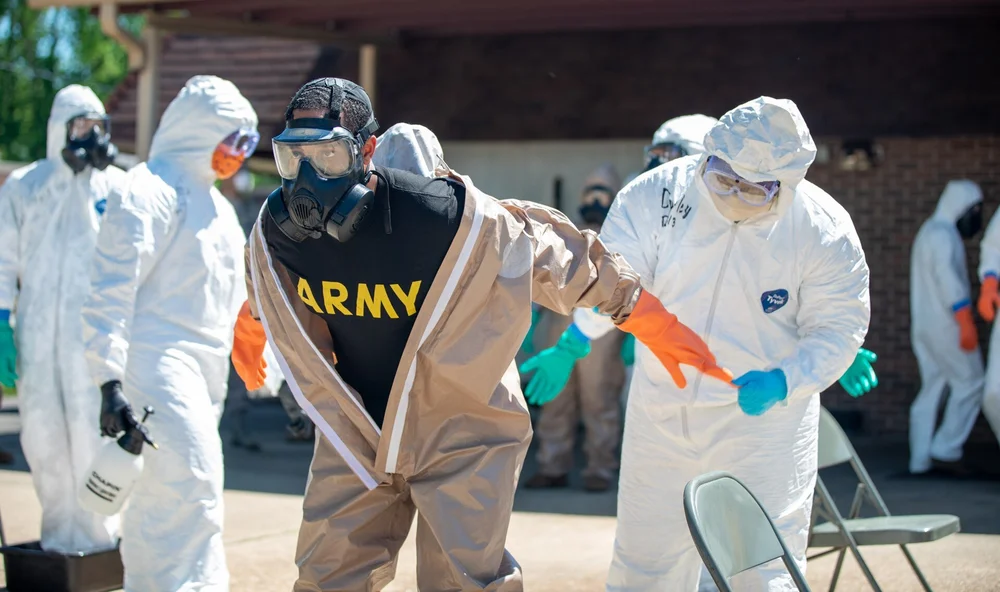
Photo: The National Guard, public domain, via Wikimedia Commons
When the person who was hurt survived
Most of our violent crime calls involve someone who lived through it. That brings a different set of feelings than a death: relief, anger, fear of going back into the room, worry about the person still in the hospital. Sometimes the person calling us is the survivor.
If that's you, we'll keep the call simple and practical. You don't need to explain what happened. We'll ask whether the police have released the property, where it is, and how we can get in. If you'd rather a friend or relative handled the arrangements, that's fine.
Recovery takes time, and so does feeling safe at home again. Having the space cleaned by someone else is one way to make returning a little easier.
What these scenes usually involve
Violent incidents tend to leave more than biological material. Without going into detail, we commonly find:
- Blood spread across several surfaces as people moved, sought help or were treated by paramedics
- Broken glass from windows, doors, tables or bottles
- Damage from forced entry, such as splintered door frames or broken locks
- Medical waste left behind by first responders, such as gloves and packaging
- Overturned furniture and scattered belongings
- Fingerprint powder or other residue from evidence collection
Broken glass with blood on it needs particular care because it can cut through gloves and skin. That is one reason we'd ask you not to pick it up yourself.
What you can safely do before we get there
Helpful
- Keep children, pets and visitors out of the area
- Close the door to the room if you can without going in
- Photograph damage from a distance for insurance, if you feel up to it
- Keep the police report number handy
- Arrange a place to stay if the home doesn't feel secure
Better left to us
- Picking up broken glass or sharp debris
- Wiping blood from walls, floors or furniture
- Washing rugs, bedding or clothing from the area
- Throwing out damaged items before talking to your insurer
The reason is safety, not rules. Blood can carry bloodborne pathogens such as hepatitis B, hepatitis C and HIV, which can spread through contact with infected blood. Our guide on the limits of household cleaning explains why ordinary cleaning products aren't enough on porous materials.
Broken doors, windows and securing the property
If a door or window was broken, getting the home secure may feel more urgent than the cleanup. Board-up and repairs aren't part of our service. We can, though, talk through who to call: a locksmith for a damaged lock, a glass company or general contractor for windows and frames, or your landlord if you rent. Your insurer may have preferred vendors too.
We'll coordinate with whoever is doing those repairs so the cleanup comes first wherever biological material is involved. For example, we'd remove contaminated material around a door frame before a carpenter replaces it.
How the cleanup works
Confirm release
We check with you that police have released the scene.
Walkthrough and scope
We look at every affected surface, including the routes people took in and out, and write up what needs to be done.
Debris and sharps
Broken glass and other sharp debris with biological contamination are collected in puncture-resistant containers.
Removal and cleaning
Contaminated porous materials are removed; surfaces are cleaned and treated with EPA-registered disinfectants used according to label directions.
Disposal and paperwork
Waste is disposed of in line with applicable Tennessee and federal requirements. You get photos, a written scope and an itemized invoice.
Help with costs for victims of crime
If the crime happened in Tennessee in the victim's home, or an eligible relative's home, the state's Criminal Injuries Compensation program can pay up to $3,000 for cleaning and removal of materials. It doesn't pay for repairs or replacement. The crime generally has to be reported to police within 15 days, with some exceptions, and the claim filed within two years. The program pays after insurance and other sources.
Some property insurance policies may cover part of the cleanup or the repairs; that depends on the policy and the insurer. We provide documentation you can send to either. For a broader overview of costs, see how biohazard cleanup pricing is determined.
What shapes the scope of a violent crime cleanup
Violent incidents are often less contained than people expect. Someone injured may have moved through several rooms, out a front door and down steps, and paramedics may have treated them in a hallway or on a lawn. Each of those places becomes part of the job. The main things that shape the written scope are:
- How many areas were affected, indoors and out
- Whether blood reached porous materials such as carpet, rugs, upholstery or unsealed wood
- The amount of broken glass and damaged material mixed with biological contamination
- Whether blood ran under baseboards, thresholds or flooring seams
- Access and parking, especially in apartment buildings
We don't quote over the phone because these details only become clear on site. If you'd like to get on the schedule online, the Order Online page takes a $2,000 initial deposit, which is not the final price. Details of the blood side of this work are on our crime scene blood cleanup page.
How this differs from related services
Where someone died, our homicide scene cleanup page is written for that situation. If the injury wasn't caused by a crime, such as a fall or a workplace accident, see serious injury scene cleanup. For an assault where you want information focused on that alone, assault scene cleanup covers it, and gunshot scene cleanup covers shootings.
We're based in Nashville and travel throughout our service area, including Clarksville and Lebanon. All of our crime scene services are listed on the main crime scene cleanup page.
Questions people ask
The incident happened outside, on my porch or driveway. Do you clean that?
Yes. Concrete, brick and wood decking can absorb blood, and porous outdoor surfaces may need more than a rinse. We'll look at it during the assessment.
Can you clean my car if the incident happened in it?
Yes. Vehicles have their own challenges, such as seat foam and carpet. See vehicle biohazard cleanup for more.
Do I have to wait for the person who was hurt to come home?
No. Many families prefer the space to be cleaned before the person returns from the hospital, so they don't have to see it. All we need is the police release and someone to give us access.
Will you fix the broken door?
Repairs aren't something we do, but we'll tell you who to contact and plan our work so it doesn't hold up theirs.
Can I ask that you not discuss the incident with my landlord or neighbors?
Yes. We speak only to the people you name. If you rent, your landlord may need to know about damage to the unit, but what you share with them is up to you.
Sources
Let someone else handle the room
Call (615) 513-5112 any time. We'll confirm the police release, arrange access and give you a written scope before work begins.