Traumatic Incident Scene Cleanup
A traumatic incident scene is any place where a sudden, violent or accidental event has left blood or other bodily fluids behind. That might be a shooting, an assault, a bad fall, a workplace accident or a death. Once police and, where involved, the medical examiner have released the property, our Nashville team removes the biological material, takes out what can't be saved, and disinfects what remains.
This page explains what the term covers, how to tell which kind of cleanup you need, and how the work goes from first call to a room you can use again. If you are not sure what to call your situation, that is fine. Call us and describe it in your own words.
If anyone is hurt or in danger, call 911 first. If you are struggling after what happened, you can call or text 988 at any hour to reach the 988 Suicide & Crisis Lifeline.
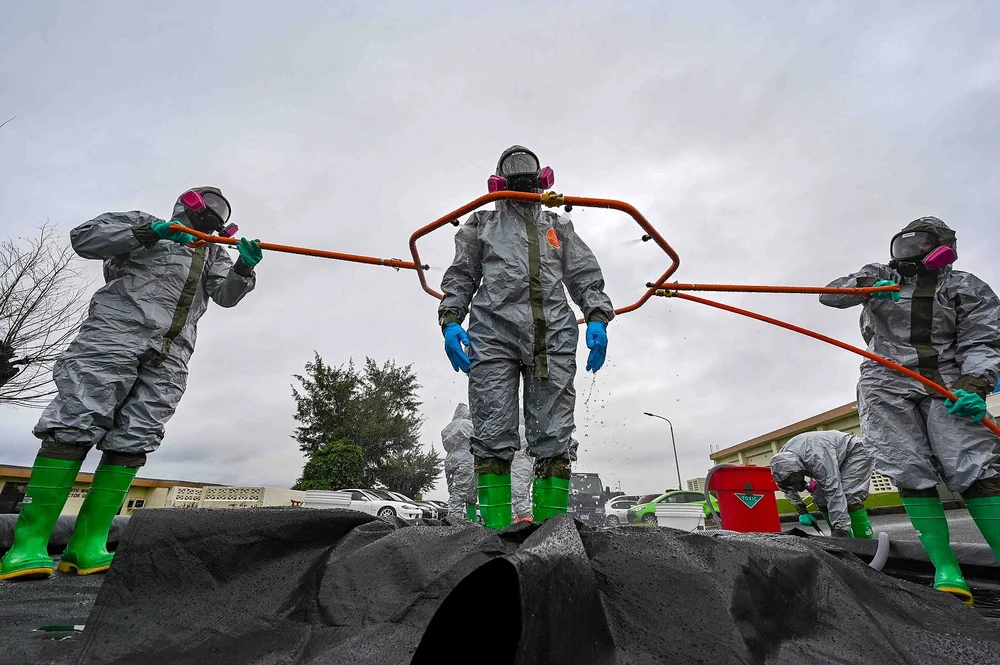
Photo: U.S. Air Force, public domain, via Wikimedia Commons
What "trauma scene" actually means
People in this industry use "trauma scene" as an umbrella phrase. It describes the aftermath of an event, not the event itself. The common thread is that a person was badly hurt or died, and blood or other potentially infectious material ended up on surfaces where people live or work.
Some of those events are crimes. Many are not. A ladder fall in a garage, a table saw accident in a workshop, a medical emergency on a bathroom floor or a car crash where an injured driver waited in the vehicle can all leave behind the same kind of contamination as a crime. The cleanup method depends on what the material is, where it went and what it soaked into, not on what caused it.
That is why we treat trauma scene cleanup as a category. Under it sit more specific services, each written for a particular situation. The next section helps you find the closest match.
Find the page that fits your situation
These pages cover the most common traumatic incidents we're called for. Each one explains what is different about that kind of scene.
- Gunshot scene cleanupShootings in homes, businesses or vehicles, whether or not anyone died
- Assault scene cleanupDiscreet, private cleanup for survivors and families after an attack
- Serious injury scene cleanupAccidents at home or work where someone was hurt and survived
- Emergency biohazard cleanupWhat calling at 2 a.m. realistically gets you, and what to do while you wait
- Multi-room biohazard remediationLarge jobs that span several rooms or floors and need a phased plan
Some situations have their own service categories because the work is different enough to need its own explanation:
- A death, especially one discovered after some time, is covered under unattended death cleanup. Decomposition changes the scope a great deal.
- A suicide has its own section, suicide scene cleanup, written with families in mind.
- A homicide or other crime under investigation is covered under crime scene cleanup, including what fingerprint powder and other investigation residue mean for the job.
- If what you have is mainly a blood problem with no broader scene, such as an old stain or a spill in a single spot, start with blood cleanup.
Why this isn't ordinary cleaning
Blood can carry bloodborne pathogens such as hepatitis B, hepatitis C and HIV, and the CDC notes these can spread through contact with infected blood. You usually can't tell by looking whether material is infectious, so professionals treat all of it as if it might be.
The second reason is that blood and fluids travel. They wick into carpet pad, run under baseboards, settle into grout and seep between floorboards. A surface can look clean while the material beneath it is still there, and that is often what causes a lingering odor weeks later.
The third reason is disposal. Contaminated material is packaged and disposed of in line with applicable Tennessee and federal requirements. In Tennessee, medical waste is classed as a special waste and generally can't go to a landfill unless it has been treated so it is no longer infectious. Household trash pickup is not the right route.
None of this means a household must call a professional for a small nosebleed on a tile floor. For tiny spills on hard, non-porous surfaces, public-health guidance is enough. Professional help is for anything larger, anything that soaked into a porous material, anything you can't fully see, or anything you simply can't face. Our guide on the limits of household cleaning goes into this in more detail.
How a trauma scene cleanup works
You call
Someone answers at any hour. We ask what happened in general terms, which rooms are involved, whether police or the medical examiner are still on site, and who has authority to approve work on the property. You don't need to describe anything in detail.
We confirm release and access
Cleanup can't start until law enforcement has released the scene. If a death was involved, the county medical examiner's work must also be finished. We confirm who will let us in and whether anyone else, such as an insurer or landlord, needs to be part of the decision.
Assessment and written scope
On site, we look at every affected area, including the spaces you can't see. We write down which materials can be cleaned and which have to be removed, and you get a written scope before work goes ahead.
Containment and removal
We set up a work zone to protect unaffected rooms, then remove contaminated porous materials such as carpet, pad, mattresses or sections of drywall. Everything is bagged and sealed on site.
Cleaning and disinfection
Hard surfaces are cleaned and then treated with EPA-registered disinfectants used according to label directions. Odor is addressed at the source rather than masked.
Final walk-through and paperwork
We walk the area with you or your representative, and you receive photos, the written scope and an itemized invoice. If the space will need repairs, we tell you so you can bring in a contractor.
What to do before we get there
Helpful things to do
- Keep children, pets and visitors out of the affected area.
- Close the door to the room if you can do it without touching anything contaminated.
- Turn off fans that blow toward the area, if that is easy to do.
- Write down questions for us, your insurer or your landlord as they come to you.
- Take care of yourself. Eat something, sleep somewhere else if you need to.
Things to hold off on
- Scrubbing, mopping or using bleach on soaked materials.
- Throwing out furniture or belongings before you have talked to your insurer.
- Pulling up carpet or moving stained items yourself.
- Running a shop vacuum or steam cleaner over the area.
- Entering a space police have not released yet.
The reasoning is simple: most well-meant cleaning pushes material deeper, and items you discard can no longer be documented for an insurer.
Who usually calls us
The person on the phone is rarely the person the event happened to. More often it's:
- A family member who has been handed the house keys after a loved one was taken to hospital or died.
- A survivor who wants their home back and doesn't want friends or relatives to see the room first.
- A landlord or property manager dealing with an incident in a rental unit. We can work through the owner, the manager or both.
- A business owner or facility manager after an incident at a shop, office, warehouse or hotel. We can plan the work around opening hours.
- A vehicle owner whose car or truck was involved. That has its own page, vehicle biohazard cleanup.
Whoever you are, you can ask questions before agreeing to anything. A call doesn't commit you to hiring us.
Homes, rentals, workplaces and vehicles
The same event creates different problems in different buildings.
Houses
Older Middle Tennessee homes often have hardwood under carpet, plaster walls and crawl spaces. Fluids that reach a subfloor in a house with a crawl space may need attention from below as well as above.
Apartments and condos
Shared walls and floors mean material can sometimes reach a neighboring unit. Building management usually needs to be involved, and access may depend on their schedule. We coordinate with them from the first call.
Commercial spaces
Businesses often want to reopen as soon as possible, and employees may have questions about what happened. We can work in phases and keep the work zone closed off from areas that stay open.
Vehicles
Upholstery, headliners and carpet in a car absorb fluids quickly, and the space is tight. Some materials can be removed and others can't, which affects whether a vehicle is worth cleaning at all.
What affects scope and cost
We don't publish prices because two traumatic incidents are rarely alike. The written scope after assessment is what sets the price. The main factors are:
| Factor | Why it matters |
|---|---|
| How far the material spread | One room is a different job from three rooms and a stairway. |
| What it soaked into | Tile and sealed wood can often be cleaned. Carpet pad, mattresses and upholstered furniture usually must go. |
| Time since the event | Material that has dried or seeped further can take more work to reach. |
| Access | Stairs, elevators, gated communities and parking all affect how the work is staged. |
| Waste volume | More removed material means more packaging and disposal. |
The Order Online page takes a $2,000 initial deposit to start the process. That deposit is not the final price, and paying it doesn't lock in a start time.
Insurance and victim compensation
Some property insurance policies may cover some of this work. Coverage depends entirely on your policy and your insurer, so ask them directly. We provide photos, a written scope and an itemized invoice you can pass along.
If the incident was a crime in your home or an eligible relative's home, Tennessee's Criminal Injuries Compensation program can pay up to $3,000 for cleaning and removal of materials. The crime must have happened in Tennessee and generally must be reported to law enforcement within 15 days, the claim must be filed within two years, and the program pays only after other sources. Repairs and replacement items aren't covered.
Where we work
We are based in Nashville and travel out to 15 Middle Tennessee counties, from Davidson and its neighbors out to places like Macon, Cannon and Hickman. There are no branch offices; the same team handles every job. Distance can affect timing, so we confirm scheduling for your address on the phone.
You can browse all service areas, or go straight to Davidson County or Rutherford County.
Questions people ask
Is trauma scene cleanup the same as crime scene cleanup?
They overlap, but they aren't the same. Crime scene cleanup is one kind of trauma scene cleanup. Trauma scenes also include accidents and medical emergencies where no crime happened. The cleaning methods are largely the same; the paperwork, access arrangements and people involved can differ.
Do I need to know exactly what happened before I call?
No. We need a general idea, which rooms are affected and whether the authorities have released the property. Many callers only know what they were told by police or a relative, and that's enough to start.
Can someone else handle this for me so I don't have to go back inside?
Often, yes. A relative, property manager or other person you authorize can let us in and sign off on the scope. We'll talk through who has the right to approve work on the property when you call.
Will you remove belongings from the room?
We remove items that are contaminated and can't be cleaned, and only after we've discussed them with you. Personal items such as photographs, papers or jewelry are set aside for you if they can be cleaned or are unaffected. Talk to your insurer before anything is thrown away.
Does trauma scene cleanup include repairs?
No. Our work ends at removal, cleaning, disinfection and odor control. If drywall, flooring or subfloor had to come out, a contractor will need to put it back. We'll tell you whether that's likely before work starts.
Do you cover areas outside Davidson County?
Yes. We serve 15 counties in Middle Tennessee, all from our Nashville base. Call to confirm scheduling for your location.
Sources
Talk it through with us
Call (615) 513-5112 at any hour, describe what happened in whatever words you have, and we'll explain the next steps.