Commercial Crime Scene Cleanup
A crime at a business leaves the owner or manager with two problems at once: a space that isn't safe for staff or customers, and pressure to reopen. Commercial crime scene cleanup deals with the first so you can make good decisions about the second.
We clean stores, offices, restaurants, bars and warehouses in Middle Tennessee after police release the scene. This page covers scheduling around business hours, protecting employees, public-facing areas, and the records owners, landlords and insurers usually ask for.
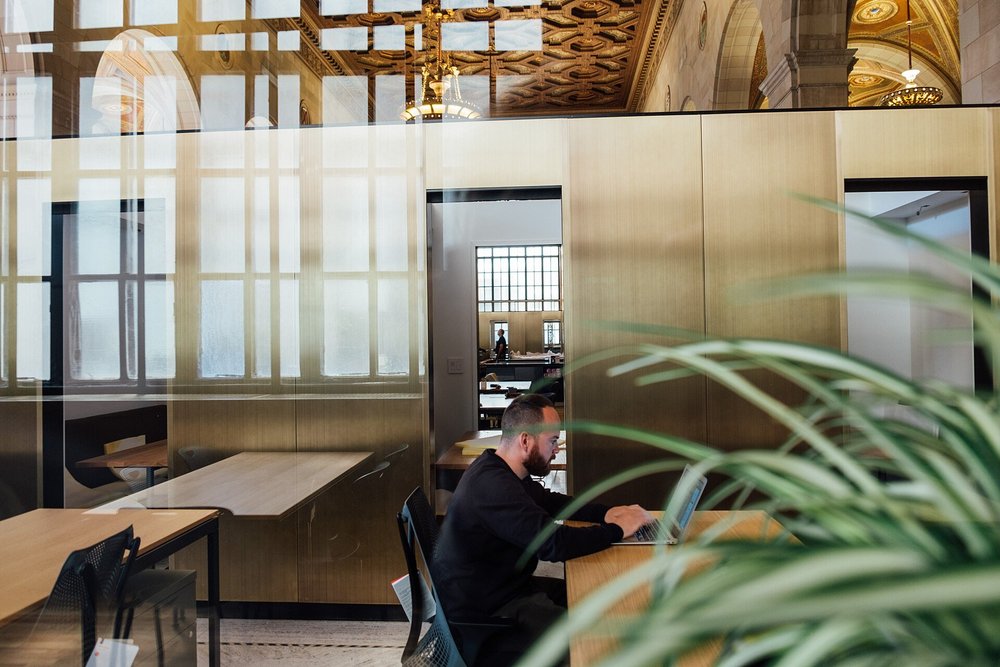
Photo: Crew (Unsplash), CC0, via Wikimedia Commons
The first decisions for a business owner or manager
Once the police release the premises, the questions come quickly: can we open tomorrow, what do we tell the staff, who is allowed back in. A few steps help regardless of the type of business.
- Keep employees out of the affected area. Close it off with doors, shelving or a locked section.
- Don't ask staff to clean it up. That includes managers and maintenance workers.
- Write down the police report number and the name of the investigating officer.
- Call your commercial insurer or broker before throwing anything out.
- If you lease the space, let your landlord or property manager know.
The guide on how businesses can plan for a traumatic incident is worth reading afterward, when things are calmer.
Why your own staff shouldn't do this cleanup
It's natural for a loyal employee to offer. It's still a bad idea. Blood can carry bloodborne pathogens such as hepatitis B, hepatitis C and HIV. Under the OSHA Bloodborne Pathogens Standard, employers whose employees have occupational exposure to blood or other potentially infectious materials must have an exposure control plan, provide protective equipment and training, and offer hepatitis B vaccination, among other requirements.
Most retail, office and restaurant employers don't have that program in place, because their staff normally have no reason to handle blood. Bringing in an outside cleanup team keeps employees out of the exposure altogether.
There's also the human side. Asking someone to clean where a coworker or customer was hurt can be hard on them. Taking that off their plate is part of looking after your team.
What changes from one kind of business to another
| Setting | What we pay attention to |
|---|---|
| Retail store or gas station | Sales floor, checkout area, stockroom; merchandise near the affected area that may need to be pulled |
| Office | Carpet tiles, cubicle fabric panels, upholstered chairs; shared break rooms and restrooms |
| Restaurant or bar | Separating food prep areas from the affected zone; booths, bar stools and fabric seating |
| Warehouse or industrial space | Sealed or unsealed concrete, racking, pallets and stock; loading docks and forklift traffic paths |
| Parking area or entryway | Exposure to customers and passersby; weather; vehicles moving through |
Unsealed concrete is worth a mention. It's porous, so blood can soak in further than people expect. We check it closely in warehouses and back-of-house areas.
Scheduling around customers and reopening
Most businesses want work done when the public isn't there. We can plan the job for overnight, early morning or a closed day, and our phone line is answered at any hour to set that up. Scheduling is confirmed by phone, and distance from Nashville can affect timing.
On larger sites, it's sometimes possible to reopen part of the premises while the affected section stays sealed off. Whether that's sensible depends on the layout, shared ventilation and whether customers or staff would pass close to the work area. We'll give you an honest view during the assessment. Decisions about reopening are yours, and if your business is regulated by a health department or other inspector, check with them too.
Public-facing areas and discretion
A storefront, lobby or dining room is visible from the street. We understand businesses don't want an obvious scene in the front window. We can screen work areas, keep equipment out of view where possible, and use a back entrance or loading door when one is available.
If the media or curious people show up, we don't discuss the incident or the business with anyone but you and the people you name.
How the work is carried out
Site walkthrough
We meet the owner, manager or facilities contact, confirm the release, and walk the affected area and surrounding routes.
Written scope
You get a written scope that lists areas, materials to remove and the planned work window, so you can share it with owners or insurers.
Containment
We isolate the area from the rest of the building and, where needed, from shared ventilation.
Removal and disinfection
Contaminated porous material is removed; hard surfaces are cleaned and treated with EPA-registered disinfectants used according to label directions.
Disposal and records
Waste is packaged and disposed of in line with applicable Tennessee and federal requirements. You receive photos and an itemized invoice.
Documentation for owners, landlords and insurers
Commercial jobs usually involve more than one decision-maker: a store manager, a regional office, a building owner, an insurer. Good records save everyone time. We provide:
- Before-and-after photos of the affected area
- A written scope describing what was removed and what was cleaned
- An itemized invoice
Some commercial property policies may cover some of this work; it depends entirely on the policy and the insurer. For background on what to keep, see documentation in biohazard remediation and commercial biohazard cleanup planning.
What drives the scope on a commercial job
Commercial pricing is based on a written scope after the assessment, and a few things tend to move it more than in a home. Square footage of the affected zone matters, but so do the materials: commercial carpet tile can sometimes be lifted in sections, while glued-down broadloom or unsealed concrete takes more work. Fixtures, racking and stock that have to be moved, after-hours or split-shift scheduling, freight elevators and loading access, and the volume of contaminated waste all feed in. See how pricing works for the general approach.
Questions people ask
Can you work overnight so we can open in the morning?
We can schedule overnight or early-morning work, and we'll tell you honestly whether the job is likely to be finished by your opening time. Larger scopes sometimes need more than one session.
Do we have to close the whole business?
Not always. If the affected area can be sealed off and staff and customers won't pass near it, part of the premises may be usable. We'll discuss that with you during the walkthrough.
Who should we list as the contact for the job?
One person who can authorize the scope and grant access, usually the owner, general manager or facilities manager. We'll copy anyone else you name on photos and the invoice.
Can our janitorial company handle it instead?
A regular janitorial crew isn't usually set up for blood and other potentially infectious materials. Check whether their employer has a bloodborne pathogens program and the right waste handling in place before asking them to do it.
Do you talk to our employees about what happened?
No. We keep conversation on site to the practical details of access and the work area. How and what to tell your staff is your decision, and some employers arrange support for employees who were present.
What happens to merchandise or stock near the affected area?
Packaged, non-porous goods with only surface contact may be cleanable. Porous items or anything that absorbed fluids usually has to be discarded. We photograph removed items so you can account for them with your insurer.
Sources
Plan the cleanup around your business
Call (615) 513-5112 at any hour to talk through the site, the timing you need and who should be on the paperwork.

