Understanding Blood Cleanup and Biological Contamination
Blood and other bodily fluids are treated as potentially infectious because they can carry bloodborne pathogens such as hepatitis B, hepatitis C and HIV. Whether a spot can simply be wiped up or needs professional remediation depends mostly on two things: how much material there is, and what it landed on. Hard, sealed surfaces can usually be cleaned and disinfected. Carpet, padding, mattresses and raw wood absorb fluid and often have to be removed.
This guide explains the terms you will hear, how contamination travels through a room, and what a sound cleanup looks like, without graphic detail.
If someone is hurt or in danger, call 911 first. Cleanup can wait until everyone is safe and police have released the area.
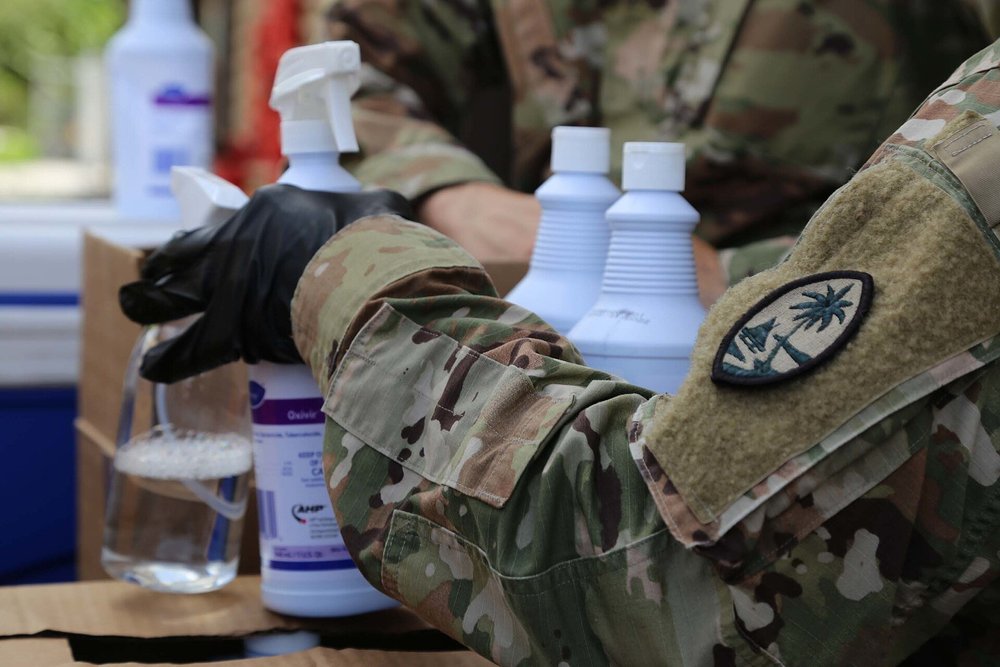
Photo: The National Guard, public domain, via Wikimedia Commons
The words you will hear, in plain language
People who work in this field use a handful of terms that can sound clinical when you are already upset. Here is what they mean.
- Biological contamination is any blood, bodily fluid or human tissue left on surfaces or materials after an injury, illness, death or crime. It is the thing being cleaned up.
- Bloodborne pathogens are germs carried in human blood that can cause disease in another person. The federal workplace safety agency, OSHA, built an entire standard around them.
- Other potentially infectious materials (OPIM) is OSHA's term for body fluids that are handled with the same caution as blood. It includes several internal body fluids, any body fluid visibly contaminated with blood, and all body fluids in situations where it is difficult or impossible to tell which fluid is which.
- Decontamination, in OSHA's definition, means using physical or chemical means to remove, inactivate or destroy bloodborne pathogens on a surface or item until it is safe to handle, use or dispose of.
- Remediation is the broader job: finding all affected material, removing what cannot be decontaminated, cleaning and disinfecting what can be saved, and packaging the waste correctly.
- Porous materials have open spaces that liquid can soak into, like carpet pad or drywall. Non-porous materials, such as glass, sealed tile or metal, keep liquid on the surface.
You do not need to memorize any of this. It simply helps to know that when a cleanup company talks about OPIM or porous materials, they are describing how they will decide what stays and what goes.
Which bloodborne pathogens are the concern
The CDC's occupational health program names hepatitis B virus, hepatitis C virus and human immunodeficiency virus (HIV) as three of the most common bloodborne pathogens. Hepatitis B and C can damage the liver over time. HIV weakens the immune system.
According to the CDC, hepatitis B spreads when blood, semen or certain other body fluids from an infected person enter the body of someone who is not infected, and this can happen even with very small amounts. The CDC also notes that hepatitis B is not spread through casual contact such as hugging, coughing or sharing food.
That balance matters. The risk is real but specific. It comes from fluid reaching a cut, a needlestick or other sharp injury, or the eyes, nose or mouth. It does not come from standing in the same house. This is why the advice for families is calm and simple: keep people and pets away from the affected area and do not handle the material, rather than leave the home in a panic.
Why everyone's blood is treated the same way
OSHA describes universal precautions as an approach to infection control in which all human blood and certain body fluids are treated as if they were known to be infectious. Nobody at a scene knows another person's health history, and it would not be appropriate to ask. Treating every situation the same way removes guesswork. It is also why a professional crew wears the same protective equipment whether the person involved was a stranger or a beloved grandparent.
How blood and fluids travel beyond what you can see
One of the most common surprises for property owners is that the affected area is larger than the visible stain. Liquids move in predictable ways, and each of them can carry contamination somewhere you would not think to look.
Downward, by gravity
Fluid that reaches a carpeted floor passes through the fibers, into the pad, and often onto the subfloor below. On a second story, it can reach the ceiling of the room underneath. On a hard floor, it finds the seams between boards or tiles.
Sideways, by wicking
Absorbent materials pull liquid outward along their fibers. Carpet pad is especially good at this, which is why the stained area on the pad is usually wider than the stain on the carpet face. Drywall can draw moisture upward from the floor line.
Outward, by people
Shoes, wheels and well-meaning cleaning efforts move material from one room to the next. Emergency responders have to move quickly, and that is the right priority. It does mean that hallways, doorways and thresholds are routinely checked during an assessment even when nothing obvious is there.
Over time, by drying
Dried material can look settled and harmless. OSHA's definition of regulated waste specifically includes items caked with dried blood or other potentially infectious materials that can release them during handling, so dried does not mean resolved. Scrubbing a dried stain can break it loose and spread it. Our page on older, dried blood stains covers this situation in more detail.
Porous, semi-porous and non-porous surfaces compared
The single most useful idea in blood cleanup is that the surface decides the method. The table below sorts common household materials into three rough groups. Real decisions are made on site, because finishes, age and damage change how a material behaves.
| Group | Common examples | What usually happens |
|---|---|---|
| Non-porous | Glass, mirrors, glazed ceramic tile, stainless steel, sealed stone countertops, many plastics | Cleaned to remove all visible material, then disinfected with an EPA-registered product used according to its label |
| Semi-porous | Sealed hardwood, laminate, vinyl plank, painted drywall, finished cabinets, grout | Depends on how far fluid got. Surface finish may protect the material, but seams and edges often let liquid through, so sections may need removal |
| Porous | Carpet and pad, mattresses, upholstered furniture, fabric, unfinished wood, raw drywall, ceiling tiles | Usually removed where affected, because fluid inside the material cannot be reliably reached by cleaning |
The CDC's environmental infection control guidance says plainly that carpeting contaminated with blood or other potentially infectious materials cannot be fully decontaminated. That statement comes from guidance written for healthcare facilities, but the reasoning applies to homes too: fluid inside the pile and backing is out of reach of any surface treatment.
For a deeper look at the decision of keep versus remove, see what happens to contaminated porous materials and how professionals decide whether materials can be remediated.
Why a surface that looks clean may not be decontaminated
Removing a stain and decontaminating a surface are two different results. A household cleaner can make a floor look fine while leaving material in seams, or while never staying wet long enough to do its job.
Three points from federal guidance explain the gap:
- Cleaning comes before disinfecting. The CDC notes that label claims for EPA-registered disinfectants are based on use on a pre-cleaned surface, and that most organic matter should be removed from a large spill before final disinfection. Spraying disinfectant onto heavy contamination does not do the same job.
- Contact time matters. The EPA defines contact time as how long a product must remain on a surface to be effective, and says the surface should stay visibly wet for that whole period. Many people wipe a product off within seconds.
- The label is the rule. The EPA says products should be used according to their use directions, and that if a label does not include directions for a particular pathogen, EPA has not reviewed data showing it works against that pathogen. Bleach mixed by guesswork, or a general-purpose spray, may not carry the claims the situation calls for.
Professional crews use EPA-registered disinfectants according to label directions, after the physical cleaning step is finished. That sequence, not any single product, is what makes the difference.
When a household can manage and when it cannot
Not every drop of blood needs a biohazard company. A small nosebleed on a bathroom tile or a cut finger on a kitchen counter can be handled by an adult following CDC or local public-health guidance for small spills on hard surfaces: gloves, cleaning first, then a suitable disinfectant used as directed.
Usually fine for a household
- A small amount on a hard, sealed surface
- Fresh and easy to see in full
- From a minor injury to someone in the home
- An adult who feels steady handling it
Better left to professionals
- Any amount soaked into carpet, a mattress or upholstery
- More than one room, or tracked through a space
- Material that has dried, or that sat undiscovered
- Anything connected to a death, crime or serious injury
- A situation that is emotionally too heavy, whatever its size
The last point deserves emphasis. You are not obliged to clean up after a loved one, even when the physical job seems small. Asking for help is a reasonable decision. Our separate guide on the limits of household cleaning walks through the reasons in more depth, and why professional biohazard cleanup may be necessary covers the wider picture, including waste rules and emotional cost.
Until help arrives
Keep children and pets out of the area, close the door if you can, and avoid running a fan or the heating and cooling system directly into the room if that is easy to avoid. Do not throw away furniture or belongings until you have spoken with your insurer. Then call for an assessment.
How a professional blood cleanup is carried out
Every job is different, but a sound cleanup follows a recognizable order. Here is the general sequence we follow at Nashville 24/7 Biohazard Disposals.
Confirm the scene is released
If police or the county medical examiner were involved, work begins only after they have released the property. This protects their investigation and your legal position.
Assess and map the affected area
The crew identifies every surface and material involved, including adjoining rooms and hidden layers. You can read how this works in our guide to the assessment.
Set up access control
The work area is separated from the rest of the property so that material is not carried out on shoes or tools. The approach is described in how cleanup teams manage access and containment.
Remove gross contamination and affected porous materials
Bulk material is absorbed and lifted. Carpet, pad, soft furnishings and sections of drywall or subfloor that cannot be decontaminated are cut out and packaged.
Clean, then disinfect
Remaining surfaces are cleaned to remove residue, then treated with EPA-registered disinfectants used according to label directions and contact time.
Deodorize where needed
Odor sometimes lingers in structural materials even after removal. Our guide on remediation and odor explains why.
Package and dispose of waste
Contaminated materials are packaged and disposed of in line with applicable Tennessee and federal requirements.
Walk through and document
You receive a record of what was removed and treated, which you can share with an insurer or a contractor who will handle repairs.
What happens to contaminated material afterward
Families often ask whether they can bag up a stained rug and put it out with the trash. In most cases that is not the right path for material soaked with blood or other bodily fluids.
Under OSHA's bloodborne pathogens standard, regulated waste includes liquid or semi-liquid blood, items that would release blood if compressed, items caked with dried blood that could release it during handling, and contaminated sharps. That standard governs employers, but it reflects a widely shared view of what makes material hazardous to handle.
At the state level, guidance from the Tennessee Department of Environment and Conservation lists medical waste as a special waste and states that medical wastes are generally prohibited from management in a solid waste processing or disposal facility unless they have been treated to render them non-infectious. In practical terms, heavily contaminated debris needs a proper disposal route, not a curbside bin.
When we remove materials, they are packaged on site and disposed of in line with applicable Tennessee and federal requirements. If you have questions about a specific item, such as a family heirloom you hope to keep, ask before work starts. Sometimes a hard object can be cleaned and returned. Our furniture and material assessment service is built around those conversations.
Misconceptions that lead to bigger problems
"Bleach takes care of everything"
Bleach can be part of a disinfection process on suitable surfaces, but the CDC notes that even strong chlorine solutions may fail to fully inactivate high levels of virus in large quantities of blood. Bleach poured over heavy contamination, or into carpet, does not reach what is underneath and can damage materials.
"If the stain is gone, the problem is gone"
Stain removers are designed to change appearance. Fluid that passed through to the pad or subfloor is unaffected by what happens at the surface.
"Old blood is no longer a concern"
As noted above, OSHA treats items caked with dried blood that can release it during handling as regulated waste. Age changes how material behaves, not whether it should be handled with care.
"Steam cleaning will lift it out"
Steam and hot water extraction can push liquid deeper into backing and pad, and add moisture that spreads it sideways. It is a carpet care method, not a remediation method.
"The police or the medical examiner will clean up"
Law enforcement and medical examiners investigate. They do not clean the property. Cleanup is the responsibility of the property owner, often with help from a company like ours. The difference between crime scene cleanup and general cleaning is worth understanding before you hire anyone.
What to remember if you are facing this today
Blood and other bodily fluids are handled carefully because they can carry hepatitis B, hepatitis C and HIV. The risk comes from contact, not proximity, so keeping people away from the area is the most useful thing you can do right now.
Hard, sealed surfaces can usually be cleaned and disinfected. Carpet, pad, mattresses, upholstery and raw building materials generally cannot, once fluid has soaked in. Contamination is often wider and deeper than it looks, and a clean appearance is not the same as decontamination.
Small spills on hard surfaces can be handled at home with public-health guidance. Anything larger, porous, hidden or tied to a death or traumatic event is a job for professionals, both for safety and for your own wellbeing. When you are ready, you can reach our team to talk it through, or request cleanup online.
Questions people ask
Can I catch something just by being in the room where blood was spilled?
Bloodborne pathogens spread through contact with infected blood or certain body fluids, such as through a cut, a sharp injury, or the eyes, nose or mouth. Being in the same room is not how they spread. Still, it makes sense to keep people and pets out of the affected area so nobody touches or tracks the material.
Is a small amount of dried blood on a hardwood floor a professional job?
It depends on the finish and the seams. A small spot on a well-sealed board may be manageable with public-health guidance for small spills. If the fluid reached the gaps between boards, sat for a long time, or came from a traumatic event, an assessment is the safer choice because liquid can travel under the surface.
Why can't contaminated carpet just be cleaned?
Fluid passes through carpet into the backing and pad, and often onto the subfloor. The CDC's infection control guidance states that carpet contaminated with blood or other potentially infectious materials cannot be fully decontaminated. Removing the affected section, and checking what is beneath it, is the reliable approach.
Do you use bleach?
We use EPA-registered disinfectants that are appropriate for the surface and the situation, applied according to the label and its contact time. The product choice matters less than the order of work: physical cleaning first, then disinfection.
What is the difference between blood cleanup and biological contamination cleanup?
Blood cleanup focuses on blood specifically. Biological contamination cleanup is broader and covers other bodily fluids and human material. The methods are closely related, and one visit often involves both.
Can my insurance pay for blood cleanup?
Some property insurance policies may cover some of this work, but coverage depends entirely on your policy and your insurer. We can provide photos, a written scope and an itemized invoice that you can give to your insurer. Our guide to insurance questions after a biohazard incident lists useful things to ask.
Will anything need to be rebuilt after the cleanup?
If sections of drywall, flooring or subfloor are removed, they will need to be replaced. That repair work is generally done by a contractor, not by a biohazard cleanup company. We will tell you during the assessment whether your project is likely to need one.
Sources
Questions about blood on a surface in your home or business
Call (615) 513-5112 any time to describe what you are seeing. We will help you decide whether it needs a professional assessment.