Blood Cleanup in Commercial Buildings
When a customer, student or employee is injured on your premises, the immediate priority is getting them help. The next one is getting the space safe and back in use. We clean and disinfect blood and bodily fluids in offices, shops, restaurants, schools, gyms and other commercial buildings, and we can schedule around your opening hours.
This page covers the employer side of blood exposure, how we work in spaces the public uses, after-hours arrangements and the records you'll want afterward.
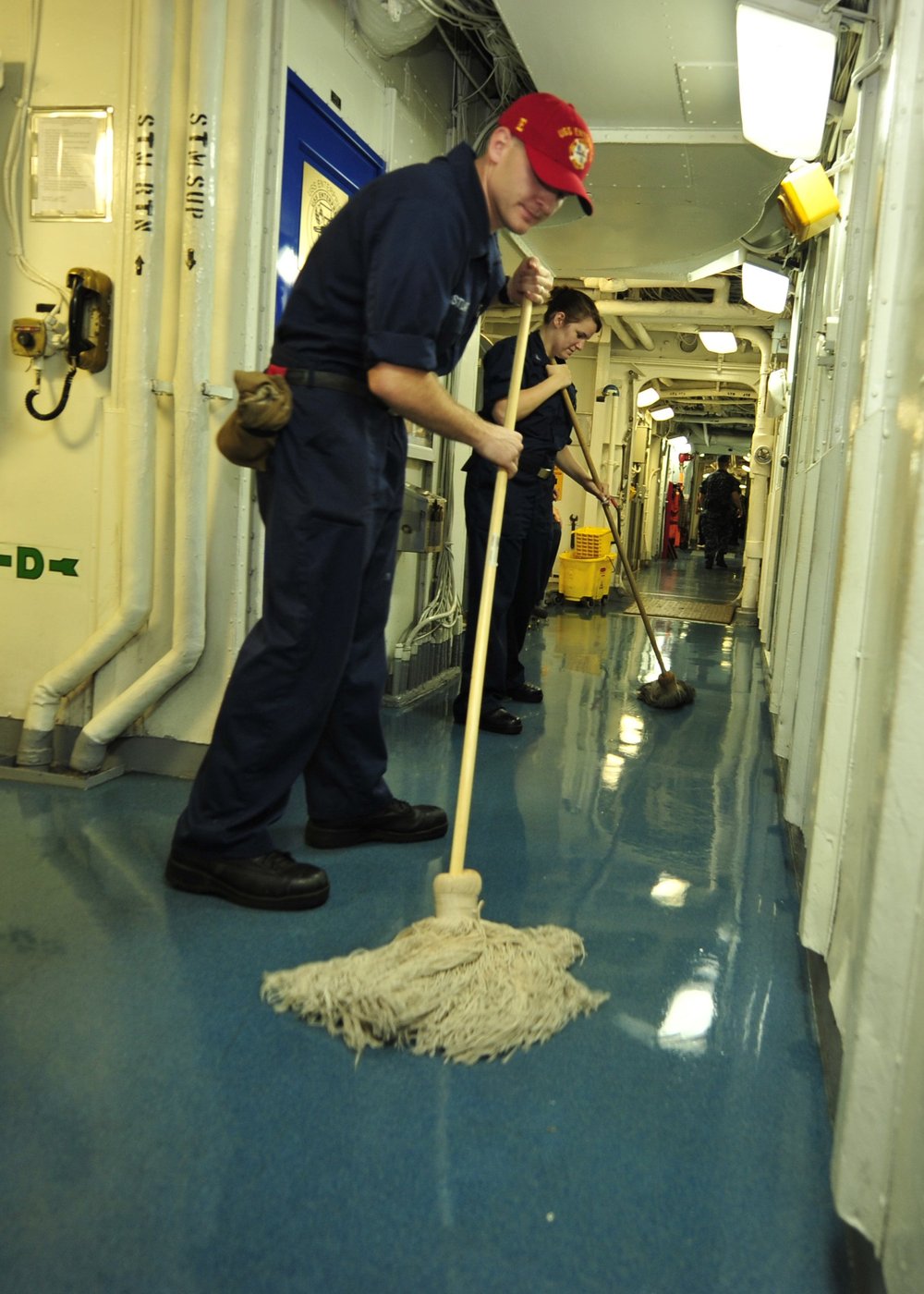
Photo: U.S. Navy, public domain, via Wikimedia Commons
Common incidents in commercial settings
Workplace blood incidents tend to be sudden and public. Examples:
- Retail and grocery: a customer falls in an aisle or is cut by broken glass at a register.
- Restaurants and commercial kitchens: a knife or slicer injury in the back of house.
- Gyms and fitness studios: an injury on equipment or a medical emergency on the floor or in a locker room.
- Schools and childcare: an injury in a classroom, hallway, restroom or on a bus.
- Offices and warehouses: a fall, a machinery accident or a medical event at a desk or in a break room.
If the incident involved a crime, see commercial crime scene cleanup. For hotels and short-stay rentals, our hotel biohazard cleanup page is more specific.
Bloodborne pathogens and employer obligations
The OSHA Bloodborne Pathogens Standard, 29 CFR 1910.1030, applies to employers whose employees have occupational exposure to blood or other potentially infectious materials. Among other things, it requires a written exposure control plan, appropriate personal protective equipment, training, and an offer of hepatitis B vaccination to covered employees.
Whether the standard applies to a particular role, such as a cashier, a cook or a gym attendant, depends on whether exposure is reasonably anticipated as part of their duties. That's a question for your safety lead or an advisor, not something we can decide for you. What we can say is that bringing in an outside cleanup company for anything beyond a small, contained spill keeps your staff out of the exposure in the first place.
If an employee was exposed
If anyone on your staff came into contact with blood while helping, follow your exposure control plan and get medical advice for them promptly. Cleanup is secondary to that.
Getting public areas back in use
Businesses want the affected area closed for as short a time as reasonable without cutting corners. Our approach in public spaces:
- Close the zone, not the building. Where the layout allows, we cordon off the affected area and a route for waste, so the rest of the premises can stay open.
- Prioritize customer-facing surfaces. Floors, counters, handrails and door hardware in public areas are cleaned and disinfected in a sensible order.
- Respect contact times. EPA-registered disinfectants only work when used as the label directs, including the time a surface stays wet. We don't shorten that to reopen sooner.
- Plan for flooring. Commercial carpet tiles can often be lifted and replaced individually; broadloom and upholstered seating may need removal. Replacement is a contractor's job.
In the first hour after an incident
Once the injured person has help, a few simple steps make the cleanup easier and safer:
- Close off the area with whatever you have, such as chairs, signs or a closed door, so customers and staff walk around it.
- Keep anyone without training and protective equipment from cleaning it up.
- Note who helped the injured person and whether anyone had contact with blood, for your incident report.
- Take a few photos of the area before it's disturbed further.
- Turn off fans or floor-level air vents blowing across the area if that's simple to do.
After-hours and scheduled work
Our phone line is answered day and night. Many businesses prefer that we work after closing, before opening or over a weekend, so staff and customers don't see the cleanup. We'll agree a time with you; scheduling depends on location and our existing commitments, so we confirm it by phone rather than promising a time in advance.
Tell us about alarm codes, key holders, loading access and any building rules. Multi-tenant buildings often require notice to building management before contractors work after hours.
How a commercial job runs
Initial call
We ask about the incident, the area, surfaces involved and when the space needs to be usable.
Assessment and scope
We inspect and provide a written scope for your manager or facilities team to approve.
Cleanup
We contain the area, remove contaminated porous materials, then clean and disinfect hard surfaces.
Waste and records
Contaminated material is disposed of in line with applicable Tennessee and federal requirements, and you receive photos, the scope and an itemized invoice.
For businesses that want to think about this ahead of time, the guides on commercial biohazard cleanup planning and how businesses can plan for a traumatic incident are a good start.
Records your business may need
After an incident, businesses often need paperwork for an insurer, a landlord, a corporate office or internal safety files. We provide dated photos, a written scope describing the work and the reason for any material removal, and an itemized invoice. We don't make claims about your compliance status, but these records can sit alongside your own incident report. The guide on documentation in biohazard remediation explains each record.
Some commercial property policies may cover part of the cost; that depends on the policy and insurer.
Scope, cost and service area
Scope depends on the area affected, the surfaces and furnishings involved, whether materials need removal, access and timing constraints, and waste volume. We don't publish prices; you'll get a written scope before work begins. For larger or unusual sites, our specialized remediation assessment may be the right first step, and workplace biohazard cleanup covers incidents beyond blood.
We travel from Nashville to businesses across Middle Tennessee, including Nashville, Brentwood and Lebanon. See all service areas or go back to the blood cleanup overview.
Questions people ask
Can our janitorial staff handle blood cleanup?
For a small spill on a hard surface, trained staff following your exposure control plan may be able to. For anything larger, anything on carpet or upholstery, or anything your staff aren't trained and equipped for, an outside company is the safer choice.
Will you work when we're closed?
We can schedule commercial work for evenings, early mornings or weekends. We confirm timing with you by phone based on location and our schedule.
Do you provide anything for our OSHA records?
We provide photos, a written scope and an itemized invoice describing what was done. We don't certify compliance, but these records can support your own incident documentation.
Can you clean a school bus or company vehicle?
Yes. Vehicle interiors are a common request; see vehicle biohazard cleanup.
How do you keep it discreet in front of customers?
Working outside opening hours is the simplest way. When that isn't possible, we keep the work zone screened as far as the space allows and use a route for waste that avoids the main customer areas.
Who should we have on site when you arrive?
Someone who can authorize the scope and knows the building, such as a manager or facilities lead. They can show us the area, explain what happened and confirm access for any later visits.
Sources
Get your space back in use
Call (615) 513-5112 to describe the incident and when you need to reopen. We'll plan the cleanup around your business.