Gunshot Scene Cleanup
After a shooting, the biological material is often spread higher and wider than people expect, reaching walls, ceilings, light fixtures and the backs of furniture. Once police have released the scene, we clean and disinfect every affected surface, remove materials that can't be saved, and leave the space ready for repairs.
This page is for anyone dealing with a shooting where someone was hurt or died, whether it was an accident, a crime, or something that is still under investigation. It covers what's different about these scenes, how release works, and where financial help may come from.
If the shooting was a suicide, our suicide gunshot cleanup page is written specifically for families. If you are having thoughts of harming yourself, call or text 988 to reach the 988 Suicide & Crisis Lifeline.
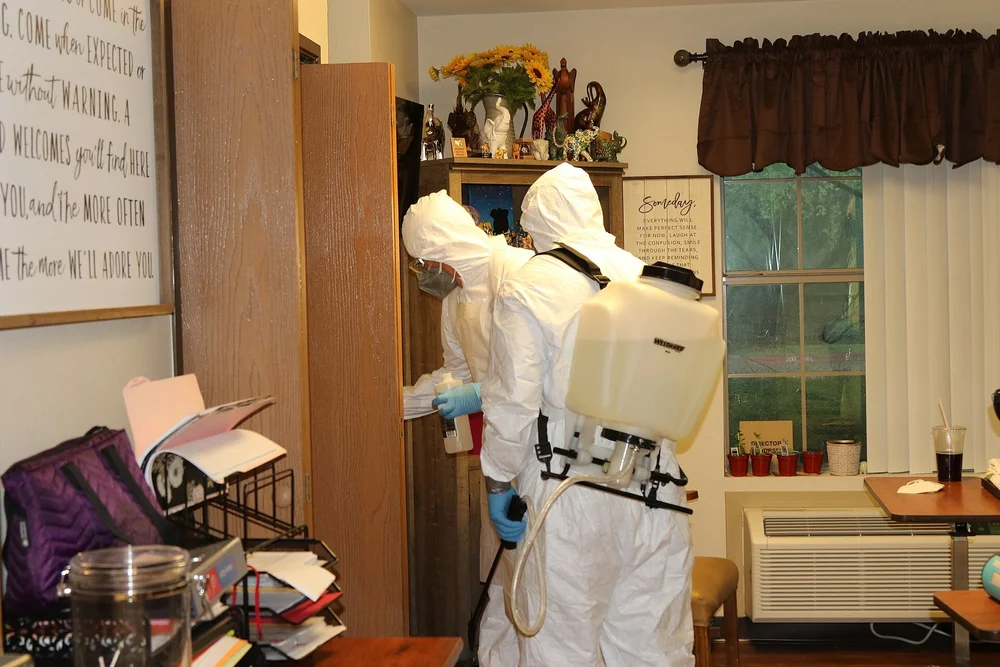
Photo: The National Guard, public domain, via Wikimedia Commons
Shootings we're called for
A gunshot scene isn't one kind of event. The calls we receive include:
- An accidental discharge at home, during cleaning or handling, where someone was injured and taken to hospital.
- A shooting inside a business, such as a store, bar, office or parking garage.
- A shooting in or into a vehicle, where the person was hurt inside the car or truck.
- A home invasion or domestic incident under police investigation.
- A death where the cause is still being determined by the medical examiner.
In many of these, the person survived. The cleanup is still needed, and families are often handling it while someone they love is in hospital. If a death was a suicide involving a firearm, that page addresses the family's situation more directly. A homicide scene has its own considerations around investigation and timing.
Why these scenes need a different approach
With most injuries, blood ends up on the floor and nearby surfaces. A gunshot can carry small amounts of biological material onto walls, ceilings, window coverings and objects several feet away. Much of it is hard to see, especially on textured paint, popcorn ceilings, wood grain or patterned fabric.
That changes how we work in three ways:
We inspect high and wide
The assessment covers the full height of the room, the tops of door frames and cabinets, ceiling fans, vents and light fixtures. We also check adjoining rooms if a door was open.
Wall and ceiling materials matter
Painted drywall can often be cleaned. Unsealed or textured surfaces sometimes can't be cleaned reliably, and a section may need to be cut out. Where a projectile passed through drywall, the material around the hole is checked as well.
Small items add up
Lampshades, books, picture frames, blinds and electronics near the scene each need a decision: clean, set aside for you, or remove. We go through these with you rather than deciding alone.
Police release and what investigators may take
We can't begin until law enforcement has released the property. In a death, the county medical examiner investigates traumatic and suspicious deaths, and their work must also be complete. If you're unsure whether a scene has been released, ask the investigating officer or the agency's non-emergency line. We can help you work out what to ask.
Investigators sometimes remove items as evidence, including sections of wall, carpet or furniture. They may leave behind fingerprint powder, marker flags or other residue. That residue isn't biological, but we can clean it as part of the same job when it's in the work area.
If a projectile is still in a wall
Don't try to remove it yourself. If investigators left it in place, mention it when you call. We'll leave decisions about evidence to law enforcement and will not remove anything they've asked to stay.
How the work goes
Phone call and release check
We confirm the scene is released, who's authorizing the work and how to get in. We ask whether the incident happened in a home, business or vehicle.
Room-by-room assessment
We map the affected area, including ceilings and adjoining spaces, and write a scope listing what will be cleaned and what will be removed.
Containment
The work area is closed off so unaffected rooms stay clean. In a business, this may mean temporary barriers so other parts can stay open.
Removal and cleaning
Porous materials that can't be saved are removed and sealed for disposal. Hard surfaces, from the floor up to the ceiling, are cleaned and treated with EPA-registered disinfectants used according to label directions.
Verification and handover
We walk the space with you or your representative and provide photos, the written scope and an itemized invoice. If walls or flooring were removed, we tell you what a contractor will need to replace.
Vehicles and business premises
In a vehicle, upholstery, headliners and carpet absorb fluids quickly, and a projectile may have passed through interior panels. Some vehicles can be cleaned; in others the amount of material that would need to come out makes it impractical. We'll be honest about that during assessment. Our vehicle biohazard cleanup page has more detail, and if the vehicle is at a tow yard, let us know which one.
In a business, the owner usually wants to reopen and staff want reassurance. We can schedule around trading hours where that's possible and close off only the affected area. See commercial crime scene cleanup for how we coordinate with managers and insurers.
While you wait
Keep the room closed, keep everyone else out, and don't attempt to wipe walls or ceilings. Scrubbing can spread material into textured surfaces and make it harder to remove. If there are firearms or ammunition still in the property, leave them to law enforcement or the owner; we won't handle them.
Before throwing anything away, call your insurer. They may want photos or the item itself. Our article on what not to do before an assessment has the full list.
Paying for gunshot scene cleanup
Price is set by a written scope after assessment. The main factors are how far material spread, whether wall or ceiling sections need to come out, how much furniture is affected and how long it has been since the incident. The Order Online page takes a $2,000 initial deposit, which is not the final price.
If the shooting was a crime in Tennessee and happened in the victim's home or an eligible relative's home, the state's Criminal Injuries Compensation program may pay up to $3,000 for cleaning and removal of materials. It generally requires a report to police within 15 days and a claim within two years, and it pays only after other sources such as insurance. Repairs aren't covered.
Some homeowner or business policies may cover some of the work. That depends entirely on the policy, so ask your insurer. Our guide to arranging cleanup after a gunshot incident walks through these conversations step by step.
Service area
We travel from Nashville to homes, businesses and vehicle storage lots across our Middle Tennessee service area, including Clarksville, Murfreesboro and Nashville itself. We confirm scheduling for your location by phone.
Questions people ask
Does the cleanup include patching bullet holes?
No. We clean and disinfect around any damage and remove contaminated material, but patching and painting are contractor work. We'll note the damage in our photos and scope so your contractor and insurer can see it.
The person survived. Do we still need professional cleanup?
Usually, yes, if there is more than a very small amount of blood or it reached carpet, upholstery or textured walls. Whether someone survived doesn't change the health considerations of the material left behind.
Police took part of the carpet. Do you still need to remove the rest?
Often, yes. Fluids frequently spread beyond the visible stain into pad and subfloor. During assessment we check the edges of the area investigators removed and tell you how much more, if any, needs to come out.
Can you clean the inside of a car after a shooting?
In many cases. It depends on how much upholstery and interior trim was affected. We'll tell you after assessment whether cleaning is realistic or whether the amount of removal makes it impractical.
Will neighbors see a marked van?
Ask us about discretion when you call. We understand many families and businesses would prefer the work not draw attention, and we'll talk about how to keep it low-key.
Sources
When the scene has been released
Call (615) 513-5112 any time. We'll confirm release, explain the assessment and give you a written scope before any work starts.