Emergency Biohazard Cleanup
You can call us at any hour, and a person will answer. What we can't honestly promise is a set arrival time. When work starts depends on our availability, the distance from Nashville, whether the authorities have released the property, and whether we can get safe access.
This page explains what happens when you call in the middle of the night, what decides how soon we can be there, and what you can safely do in the meantime without touching the contamination yourself.
If anyone is injured or in danger, call 911 before anything else. Cleanup always comes after people are safe.
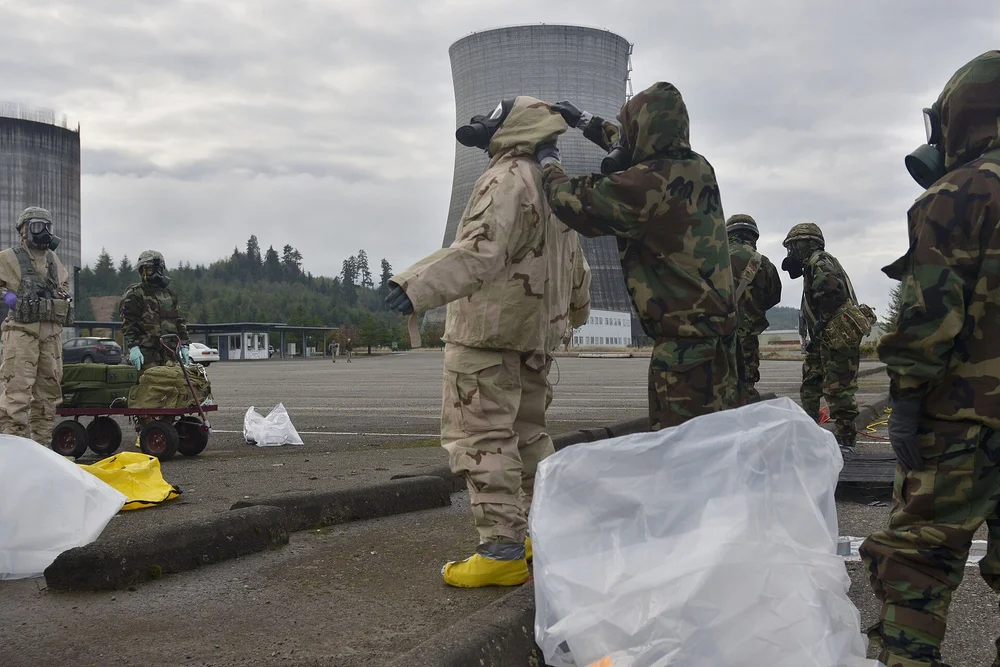
Photo: Sgt. Adam Keith, U.S. Army, public domain, via Wikimedia Commons
What "emergency" means here, honestly
Plenty of companies promise to be at your door within an hour. We don't, because it wouldn't be true every time, and the last thing you need tonight is a promise that falls through.
Here is what is true:
- The phone line takes calls day or night, weekends and holidays.
- On that first call, we'll tell you what we can about timing for your location and situation.
- We'll help you make the space safe and stable while you wait, which is often what matters most in the first hours.
- If we can't get there as soon as you need, we'll say so plainly so you can decide what to do.
What decides how soon work can start
| Factor | What it means for you |
|---|---|
| Release by police or the medical examiner | Nobody can begin until the scene is released. In a death, the county medical examiner's investigation comes first. |
| Our current schedule | We are one team. If we are on another job, we'll tell you when we expect to be free. |
| Distance | We travel out from Nashville. Outer counties take longer to reach. |
| Access and authority | We need someone who can let us in and approve work, such as an owner, executor, tenant, or a manager the owner has authorized. |
| Safety on site | Structural damage, utilities off, or an unsafe building may need to be dealt with before cleanup. |
Our guide to how property access affects cleanup covers the access questions in more depth.
What to do in the meantime
These steps keep people safe without anyone handling contaminated material. None of them involve cleaning.
Get everyone out of the area
Move children, pets and anyone not needed away from the affected room. If you can, have them stay elsewhere tonight.
Close the door
Shut the room off if you can do so without stepping in or touching anything affected. Put a note on the door if others might wander in.
Limit air movement
If it's easy, turn off fans pointing at the area. Don't turn heating or cooling off if that would make the rest of the home unsafe for the people staying there.
Don't start cleaning
Bleach, mops and paper towels can spread material deeper into carpet, grout and wood. Leave it for the assessment.
Hold onto damaged items
Don't throw anything out until you've talked to your insurer. They may want photographs or to see items.
Write down what you know
Note who the investigating officer was, any case or report number you were given, and your insurer's claim number if you have one. It speeds things up later.
For the reasoning behind these, see what not to do before an assessment.
What we'll ask on the first call
We keep the first call short. Expect questions like:
- What's the address, and what kind of property is it?
- Have police or the medical examiner released it?
- Which rooms or areas are affected, roughly?
- Is anyone living there or needing to use the space?
- Who can let us in and approve the work?
You don't need to describe what happened in detail. If you're too upset to talk it through, a friend or relative can call for you. Our guide on communicating with a cleanup company has tips for that conversation.
Situations that are urgent, and ones that can wait
Some situations genuinely need attention as soon as possible: contamination in the only bathroom or kitchen of an occupied home, material near a shared air return in an apartment building, a business that cannot open its doors, or a rental where a new tenant is due. Material that sits longer can also seep further into porous surfaces.
Other situations are better done carefully than quickly. If the property is empty and closed up, a day's wait to arrange the right access and approvals is unlikely to change much. If you're in that position, it's fine to take a breath. We'll still answer your questions tonight.
A death discovered after some time is handled through unattended death cleanup, and a business emergency through commercial biohazard cleanup, where we explain how we plan around operations.
Ordering online instead of calling
If you'd rather not talk on the phone, the Order Online page lets you start the process in writing. It takes a $2,000 initial deposit. That deposit is not the final price, which is set by the written scope after assessment, and placing an order doesn't lock in a start time. We'll contact you to confirm timing. You can also use our contact page for questions.
Once we arrive
We start with an assessment and a written scope you approve. Then we contain the area, remove contaminated porous materials, clean hard surfaces and treat them with EPA-registered disinfectants used according to label directions. Waste is packaged and disposed of in line with applicable Tennessee and federal requirements. The job ends with a walk-through, photos and an itemized invoice. Our trauma scene cleanup overview explains each step, and our guide to arranging emergency cleanup in Middle Tennessee goes deeper.
We cover 15 counties from Nashville, including Sumner, Wilson and Maury. See every area we serve.
Questions people ask
Will someone really answer at 3 a.m.?
Yes. The line takes calls at any hour. Answering doesn't mean we can be there immediately, but we'll talk you through the next steps and give you our honest read on timing.
Can you start before the police release the scene?
No. Starting early could interfere with an investigation. If you're not sure whether it's been released, ask the investigating officer, and we can help you think through what to ask.
Is it safe to sleep in the house tonight?
If the affected area is closed off and nobody needs to go into it, many people stay in the rest of the home. If the contamination is in a shared space you can't avoid, or you'd just feel better elsewhere, staying with family or in a hotel is reasonable.
Does an emergency call cost more?
Price is set by the written scope after assessment, based on factors like the extent of contamination, materials, access and waste volume. Ask us on the phone how timing might affect your particular job.
The contamination is in a rental I manage. Who should call?
Whoever has authority to approve work on the property, usually the owner or a manager acting for them. If a tenant calls first, we'll still talk them through keeping the area closed off, then confirm approval with the owner or manager before anything is removed. Our guide for apartment managers covers notifying residents and coordinating access to shared spaces.
What if you're too far away or fully booked?
We'll tell you directly so you can decide whether to wait or look elsewhere. In the meantime, the safe steps on this page still apply.
Sources
Call now, even if it's late
Ring (615) 513-5112. We'll tell you honestly when we can be there and what to do until then.