Suicide Scene Cleanup in Commercial Properties
When someone dies by suicide at a workplace, a hotel, a store or another business, managers face two responsibilities at once: caring for shaken staff and making the space safe to use again. We take the cleanup off your list. We work discreetly, can schedule around business hours, and provide the documentation owners, insurers and landlords usually ask for.
This page covers how to close the area, supporting employees, scheduling, and what records you will receive.
Coworkers, customers and managers can all be deeply affected. Anyone who is struggling can call or text 988, or chat at 988lifeline.org, to reach the 988 Suicide & Crisis Lifeline at any time.
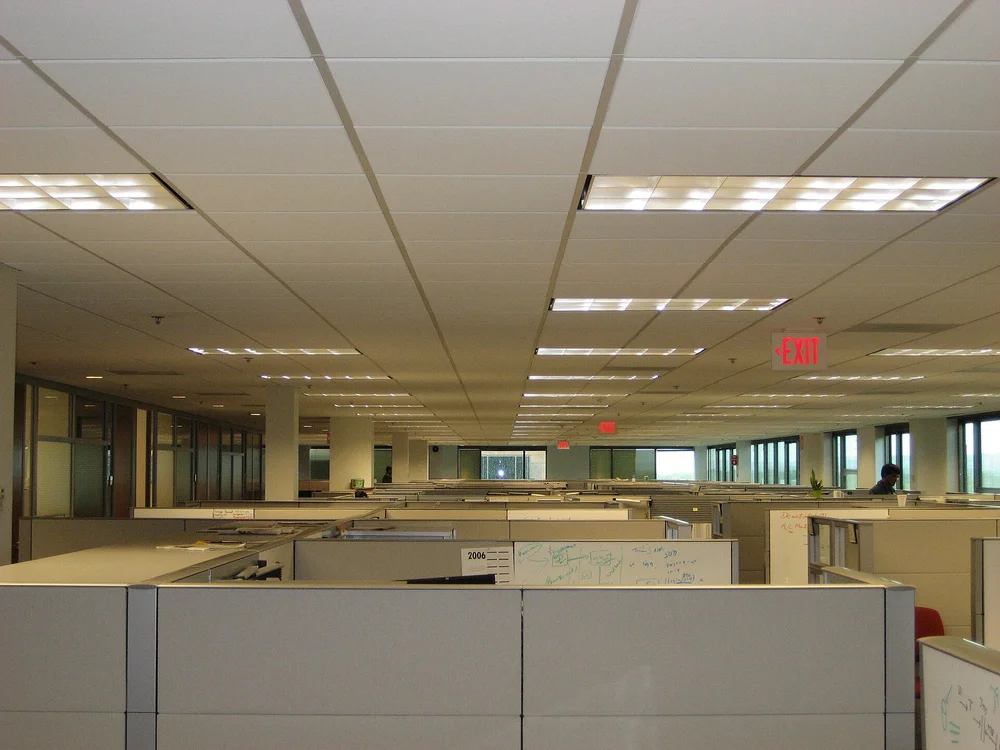
Photo: Larsinio at English Wikipedia, public domain, via Wikimedia Commons
In the first hours at a business
If anyone is hurt or in danger, call 911. After that, the priority is to keep people away from the affected area and let police and the county medical examiner do their work. Cleanup can only begin once they release the space.
While you wait, a manager can quietly take care of a few practical things:
- Close and, if possible, lock the room or section where the death occurred.
- Redirect foot traffic, deliveries and cleaning crews away from it.
- Tell your regular janitorial service not to enter that area; this is not routine cleaning.
- Identify one person to be our contact and to approve the scope.
Looking after staff
Employees who found the person, knew them, or simply work nearby may struggle in the days and weeks that follow. A few steps help:
- If your company has an Employee Assistance Program, remind staff how to reach it and that it is confidential.
- Share the 988 Suicide & Crisis Lifeline with everyone, not only those closest to the loss.
- Do not ask employees to help clean or move items from the affected area, even if they offer.
- Give people who need it time away from the space until it has been cleaned.
- Keep communication factual and brief; avoid speculating about circumstances.
Our guide on how businesses can plan for a traumatic incident includes more on communication with staff.
Scheduling around your business
Many businesses prefer that our work happens when the premises are closed or quiet. We can discuss evening, overnight or weekend scheduling when you call; availability for any particular time is confirmed by phone. We can also plan a discreet entrance, such as a loading dock or service door, and package materials before they leave the affected area.
If you need part of the building to stay open, we set up containment so the affected area is fully separated from customers and employees.
Types of premises we work in
Every commercial setting has its own considerations:
| Setting | What we plan around |
|---|---|
| Offices | Staff schedules, shared restrooms, cubicle fabric and carpet tiles |
| Hotels and short-term lodging | Guest privacy, adjacent rooms, linens and mattresses. See hotel biohazard cleanup. |
| Retail and restaurants | Opening hours, food-contact areas, public restrooms |
| Warehouses and industrial sites | Equipment, concrete and sealed floors, access for shift workers |
| Parking structures and vehicles | Public access and vehicle interiors. See vehicle biohazard cleanup. |
How the work is carried out
Confirm release and a single contact
We confirm the authorities have released the area and agree who approves the scope and receives updates.
Assess the space
We assess the affected area and any routes people used, along with shared systems such as ventilation near it.
Contain and protect
Barriers separate the work area from the rest of the premises.
Remove and disinfect
Affected materials are removed and disposed of in line with applicable Tennessee and federal requirements. Remaining surfaces are disinfected with EPA-registered disinfectants used according to label directions.
Document and release
You receive photos, the written scope and an itemized invoice before the area is reopened.
Documentation for owners, insurers and landlords
Businesses usually need a paper trail. We provide before-and-after photos, the written scope, and an itemized invoice that lists materials removed and areas treated. If you lease your premises, your landlord may want copies, and your commercial property insurer may ask for them if you file a claim. Whether a policy covers any of the work depends entirely on the policy and the insurer.
Employers also have their own obligations around workplace exposure. OSHA's Bloodborne Pathogens Standard applies to employers whose employees have occupational exposure to blood; it is a reason not to ask your own staff to clean. Our guide to documentation in remediation explains what our records include.
Reopening the space
Reopening is often harder than closing. Even after the area has been cleaned and disinfected, some employees may not want to return to it straight away, and that is a normal reaction. A few approaches managers have found helpful:
- Walk through the space yourself, or with a small group, before it is reopened to everyone.
- If flooring or fixtures were removed, consider having the contractor finish the rebuild before reopening, so the space does not look visibly altered.
- Where possible, let people who were closest to the loss choose whether to work in that area for a while.
- Repeat information about your EAP and the 988 Lifeline in the weeks that follow, not just on the first day.
If the space is leased, check with your landlord before reopening; some leases require notice about remediation or repairs. Keep the documentation we provide with your incident records.
When you are ready to plan for the future, our guide on commercial biohazard cleanup planning covers how businesses prepare for events like this.
Scope, cost and where we work
Price depends on the size of the affected area, the materials involved (carpet tile, sealed concrete, upholstered seating and so on), any containment needed to keep part of the business open, access and timing, and the volume of waste. A written scope comes first; see how pricing works. We travel from Nashville to businesses across Middle Tennessee, including Brentwood and Williamson County.
Questions people ask
Can you work while we are closed?
Often, yes. Tell us your hours when you call and we will discuss scheduling the work outside them. Timing for any particular night or weekend is confirmed by phone.
Can our janitorial staff handle it?
We recommend they do not. Routine cleaning crews are not set up for biological material, and the emotional impact on them can be significant. Ask them to stay out of the area until we have finished.
Will you arrive in a marked vehicle?
If visibility is a concern, mention it when you call and we will talk through parking, entrances and timing so the work is as unobtrusive as possible.
What should we tell employees?
Keep it brief and factual, share how to reach your EAP and the 988 Lifeline, and let them know the area is closed until it has been professionally cleaned. Avoid sharing details about the circumstances.
Who should be our contact person?
Someone with authority to approve the scope and arrange access, such as a facilities manager, general manager or owner. Ideally not someone who was close to the person who died.
Sources
Talk to us about your premises
Call (615) 513-5112 at any hour. We will help you plan the work around your staff and your business.

