How Cleanup Teams Manage Access and Containment
During biohazard cleanup, the team divides the property into a contaminated work area, a buffer where gear comes off, and clean areas that stay untouched. Only people in protective equipment go into the work area, entry and exit follow one route, and barriers keep contamination from spreading to other rooms.
This guide explains how those zones are set up, why entry is limited, how hallways, shared walls and HVAC are handled, and what it means for family members, tenants and neighbors while work is underway.
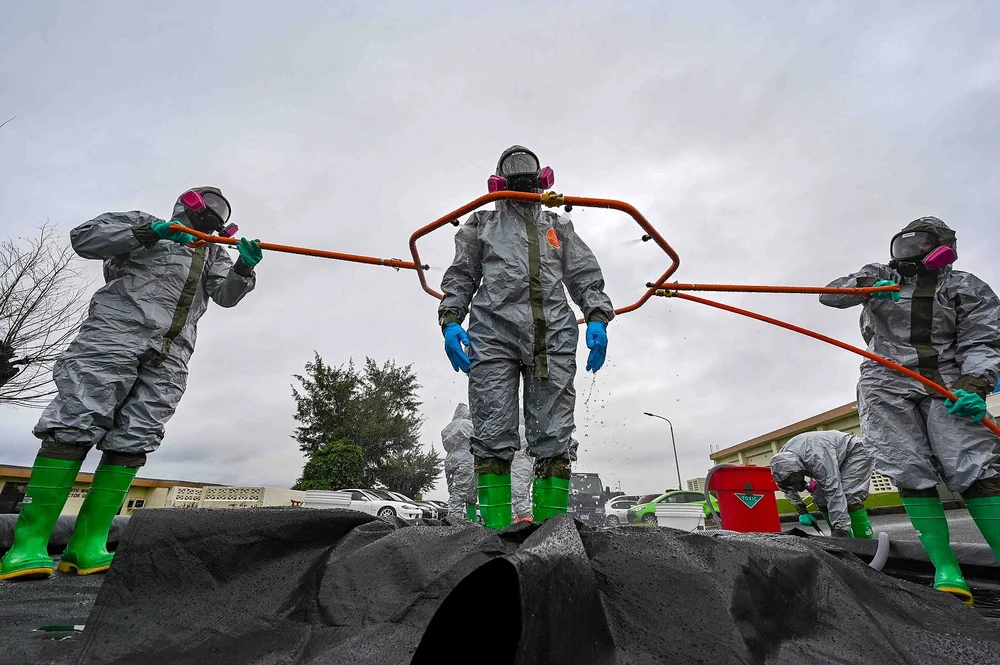
Photo: U.S. Air Force, public domain, via Wikimedia Commons
What containment means in plain terms
Containment is everything a cleanup team does to keep contamination where it already is while they remove it. Without it, the act of cleaning can spread the problem. Workers walk in and out, carry materials, open doors and stir up dust. Each of those movements could move biological material into rooms that were never affected.
Good containment has three goals:
- Protect people who live or work in the building, including family members, staff, tenants and visitors.
- Protect unaffected parts of the property so they do not need cleaning, or replacing, too.
- Keep the work orderly, so waste, tools and clean supplies never mix.
Access control is the human side of the same idea. It decides who goes where, in what equipment, and by which route. Together, they explain much of what you will see on the day: sheeting, taped floor paths, a spot by the door where gear comes off, and polite requests to stay out of certain rooms.
Access before the cleanup team is involved
If police or a medical examiner responded, the property may already have been under their control. Investigators decide when a scene is released, and cleanup cannot begin until that happens. In Tennessee, county medical examiners investigate sudden, unexpected, traumatic and suspicious deaths, among others, so their involvement is common after a death at home.
Once the scene is released, responsibility for the property returns to the owner, tenant, family or manager. That gap between release and the start of cleanup is when containment most often breaks down, simply because people do not know what to do. Simple, safe steps help:
- Close the door to the affected room if you can do so without entering it
- Keep children and pets away
- Avoid running fans or HVAC into the area if that is easy to avoid
- Do not throw anything away until you have talked with your insurer
- Limit how many people walk through the space
You will find more on these early hours in what to expect after a traumatic death in a property and what not to do before a biohazard cleanup assessment.
The three zones: work area, buffer and clean area
Most cleanup teams organize a property into three kinds of space. The names vary, but the logic is consistent.
| Zone | What happens there | Who enters |
|---|---|---|
| Work area (dirty zone) | Removal of contaminated materials, cleaning and disinfection | Only trained workers in full protective equipment |
| Buffer (transition zone) | Protective gear is removed, waste containers are closed and wiped, tools are bagged | Workers moving between zones |
| Clean area | Clean supplies, staging, rest breaks, conversations with the family or manager | Workers out of gear, and others who need to be there |
The buffer is the part people rarely notice and the part that matters most. OSHA's bloodborne pathogens standard requires that protective equipment be removed before leaving the work area and placed in a designated area or container. The buffer is that designated place. It often sits just inside the doorway of the affected room, on plastic sheeting, with waste containers ready.
In a small job the buffer might be a square of sheeting by a bedroom door. In a large job, it could be a whole hallway or a garage. The guide to multi-room biohazard cleanup explains how zones are chained together when several rooms are involved.
How a work area is set up, step by step
Setup happens before any contaminated material is touched. A typical sequence:
Walk the property and agree the route
The team identifies the affected areas, the nearest exit to a vehicle, and a path that avoids carpeted or finished spaces where possible.
Protect the path
Floor coverings go down along the route between the work area and the exit, so foot traffic and waste containers do not touch the floors underneath.
Seal openings
Doorways may be fitted with plastic sheeting and a zipper door. Vents in the affected room may be covered, and nearby doors kept closed.
Mark the buffer
A defined spot is set up for taking off gear and closing waste containers. It is kept separate from clean supplies.
Stage clean supplies outside
New PPE, disinfectants and tools wait in the clean area so they are not contaminated before use.
Only once this is in place does removal begin. Setup can feel slow when you want the work finished, but it is what keeps a one-room problem from becoming a three-room problem.
Controlling entry and exit
Access control means limiting who can enter the work area and how. In practice:
- One way in and out. Using a single route makes contamination predictable and easier to protect against.
- No casual visits. Family members, building staff and contractors are asked not to step into the work area, even briefly. If someone needs to see the space, the team can share photos or arrange a supervised look from the doorway once it is safe.
- Gear changes every time. A worker who leaves the work area, even for a minute, goes through the buffer and puts on fresh outer gear on the way back.
- No eating or drinking near the work. OSHA prohibits eating, drinking, smoking and applying cosmetics in work areas where exposure is reasonably likely.
These rules can feel strict when it is your own home. They are not a sign of distrust. They protect you from exposure and protect the rooms you will keep living in.
Keys, codes and timing
Practical access matters too. Who has keys, whether a gate or building code is needed, whether an elevator can be reserved, and when the property is empty all affect planning. Our guide on how property access affects a cleanup project covers those practical questions in depth.
Protecting unaffected rooms and belongings
Biological material does not stay politely where it first landed. It can be carried on shoes, pets and furniture, and fluids can travel under flooring or through gaps between rooms. Containment aims to stop that spread.
Common measures
- Covering floors in hallways and on stairs used as the exit route.
- Closing doors to rooms that are not part of the job, and asking that they stay closed.
- Moving belongings that are clearly unaffected out of the path before work begins, or covering them where they stand.
- Bagging contaminated items at the spot where they are removed. OSHA requires contaminated laundry to be bagged or containerized at the location where it was used and handled as little as possible, and the same careful habit applies to other contaminated items.
Belongings inside the work area
Personal items within the affected room need separate decisions. Some hard items can be cleaned and disinfected. Porous items that have absorbed fluids usually cannot. The team will talk with you about which items you want kept, and those are cleaned or packaged and then passed out through the buffer. See contaminated furniture and material assessment and how professionals determine whether materials can be remediated for more.
Airflow, HVAC and odor
Air moves through a building in ways people rarely think about. Central heating and cooling, bathroom fans and open windows all shift air from room to room. During cleanup, that movement can carry dust from demolition or odor from the affected area into clean spaces.
Teams manage airflow by:
- Discussing whether the HVAC system should be turned off or set to avoid pulling air from the affected room during the work.
- Covering supply and return vents in the work area.
- Keeping doors between the work area and the rest of the property closed.
- Ventilating in a controlled direction, toward the outside rather than through the house, where that is practical.
Odor is a sensitive topic for families. It usually comes from the source material, which is why removal and disinfection matter more than masking. Our guide to biohazard remediation and odor concerns explains this, and the odor-related remediation service page describes when extra steps may be needed.
Businesses, hotels and public spaces
In a workplace, access control also has to account for staff, customers and operations. A team may work with management to:
- Close off a section of the building, a single room or a vehicle bay while the rest stays open, where that is safe.
- Schedule work for hours when fewer people are present.
- Use a back entrance or service corridor for equipment and waste.
- Post simple signage that the area is closed, without describing what happened.
Hotels and similar settings often need the affected room and sometimes neighboring rooms held out of use until the work is finished. Our hotel and hospitality biohazard cleanup page and the commercial property cleanup planning guide explain these arrangements.
Neighbors and the outside of the property
Many families worry about what neighbors will see. Containment includes the outside of the property, too.
- Vehicle placement. Parking close to the exit route shortens the walk with waste containers.
- Waste goes straight to the vehicle. Contaminated material is packaged inside, in closable, leak-resistant, labeled containers, and carried directly out. It is never left at the curb or put into household bins. Tennessee treats medical waste as a special waste that generally cannot go to an ordinary landfill without treatment.
- Quiet conversation. If a neighbor asks what is happening, the crew can answer politely without sharing details about your family.
- Tidy exit. Floor coverings and sheeting are removed and bagged at the end, so the outside of the home looks ordinary again.
If privacy is a major concern for you, mention it on the first call. It helps the team plan arrival, parking and timing around it.
When containment comes down
Containment is removed in reverse order, and only when the work area is ready. In general, that means contaminated materials are out, surfaces have been cleaned and treated with EPA-registered disinfectants used according to label directions, including the required contact time, and the team has checked the area.
Then the barriers come down from the inside out. Sheeting and floor coverings from the work area are bagged as potentially contaminated, then the buffer is cleared, and finally the protective coverings along the exit route are lifted. Tools and equipment are cleaned or packaged before they go back into the vehicle.
At that point the affected space may look bare, especially if carpet, pad or drywall sections were removed. That is expected. Rebuilding is generally a separate contractor's job, and we will tell you if your project will need one.
Containment in vehicles, garages and outdoor spaces
Not every job happens inside a finished room. Cars, trucks, garages, porches and sheds each need the same zone logic, adapted to the space.
Vehicles
A vehicle is a small, enclosed work area with many seams, folds and hidden cavities. The team usually sets up a buffer beside the vehicle rather than inside it, with ground covering so that materials removed from seats, carpet or headliner can be bagged right at the door. Where the vehicle is parked matters. A private garage or driveway gives more control than a public street or shared lot. Our vehicle biohazard cleanup page describes these jobs.
Garages and outbuildings
Concrete floors seem easy to clean, but they are porous and often have cracks, drains and stored items nearby. Containment focuses on keeping stored belongings, tools and the door into the house separate from the work.
Porches, decks and outdoor areas
Outdoors, wind and weather replace HVAC as the airflow concern, and privacy from the street can be harder to arrange. Teams may use screens or position vehicles to shield the work from view, and they keep runoff from washing contamination into soil or drains.
Common mistakes that undo containment
Most containment problems come from well-meaning people trying to help. These are the ones that come up most often:
Helpful instincts
- Closing the door to the affected room and leaving it closed
- Writing down what you need from the room so the team can retrieve it
- Telling the team about pets, alarm systems and shared vents
- Letting the property manager know before the crew arrives
Instincts to resist
- Pulling up carpet or moving furniture before the assessment
- Running fans or opening every window to clear the air
- Carrying items out of the room in household bags
- Letting relatives walk through to see the room
- Putting soiled bedding or towels through a home washing machine
If any of these have already happened, do not worry. Tell the team. It simply means they will check the route those items or people took, and extend the work area if needed. More detail is in how to prepare a property for professional remediation.
What to remember about access and containment
- Cleanup teams split a property into a work area, a buffer and clean areas, and keep them separate.
- Only trained people in protective equipment enter the work area, by one route, changing gear every time they leave.
- Floor coverings, sealed doorways and covered vents protect rooms that were not affected.
- Airflow is managed so dust and odor are not pushed through the building.
- Shared buildings and businesses need coordination with managers, and neighbors are handled discreetly.
- Waste goes directly from the work area to the vehicle, never to the curb.
Nashville 24/7 Biohazard Disposals is one team that travels from Nashville to homes, rentals and businesses across Middle Tennessee. To learn more about the full range of work, see our services, multi-room biohazard remediation, or contact us to talk through your property.
Questions people ask
Can I stay in my home while cleanup is happening?
Often, yes, if the affected area can be sealed off and you have a separate route through the home. Some families prefer to stay elsewhere for the day. The team can tell you which rooms will be off limits and for how long once they have seen the layout.
Why can't I go into the room to collect something quickly?
Each entry without protective equipment risks exposure for you and spreading contamination into the rest of the home. Tell the team what you need, and they can locate, clean or package it and bring it out through the buffer area.
Do I need to turn off the heating or air conditioning?
Ask the team before changing anything. In many cases it helps to avoid running fans or HVAC that pull air from the affected room, but the right approach depends on the system and the season. They will advise you once they know the property.
Will the neighbors know what happened?
A cleanup team can work discreetly, with waste packaged inside and taken straight to the vehicle. They will not discuss your situation with neighbors. In apartment buildings, management may decide what to share with other residents.
What if fluids have gone through to the apartment below?
That is a real possibility in multi-level buildings. The team will usually ask the property manager for access to the unit below to check. If contamination has reached it, that space becomes part of the work area and is contained in the same way.
How long does the plastic sheeting stay up?
Until the work in that area is finished and checked. On a small job that may be the same visit. On larger or multi-room jobs, containment may stay in place between work days so the separation is kept.
Is containment included in the price?
Setting up and removing containment is part of the work and is reflected in the written scope. How much is needed depends on the size of the area, the layout and whether common spaces are involved. See how biohazard cleanup pricing is determined.
Does containment mean the whole house will be wrapped in plastic?
No. Containment is sized to the problem. For a single affected room it may be one sealed doorway, a covered path and a small buffer area. Larger setups are only used when contamination has reached several rooms or shared spaces.
Sources
Talk through access before work begins
Every property is laid out differently. Call (615) 513-5112 and we can discuss entrances, shared spaces and who needs to be kept informed before the crew arrives.