Decomposition Cleanup
Decomposition cleanup is the removal of biological material that has moved from where a person passed away into the things beneath and around them. It is needed whenever a death goes unnoticed for more than a short time, even if the room looks fairly normal from the doorway.
The hard part of this work is not what you can see. It is what has soaked downward into a mattress, through carpet, into the pad and onto the subfloor. This page explains how that happens, why wiping the surface does not solve it, and how we approach it.
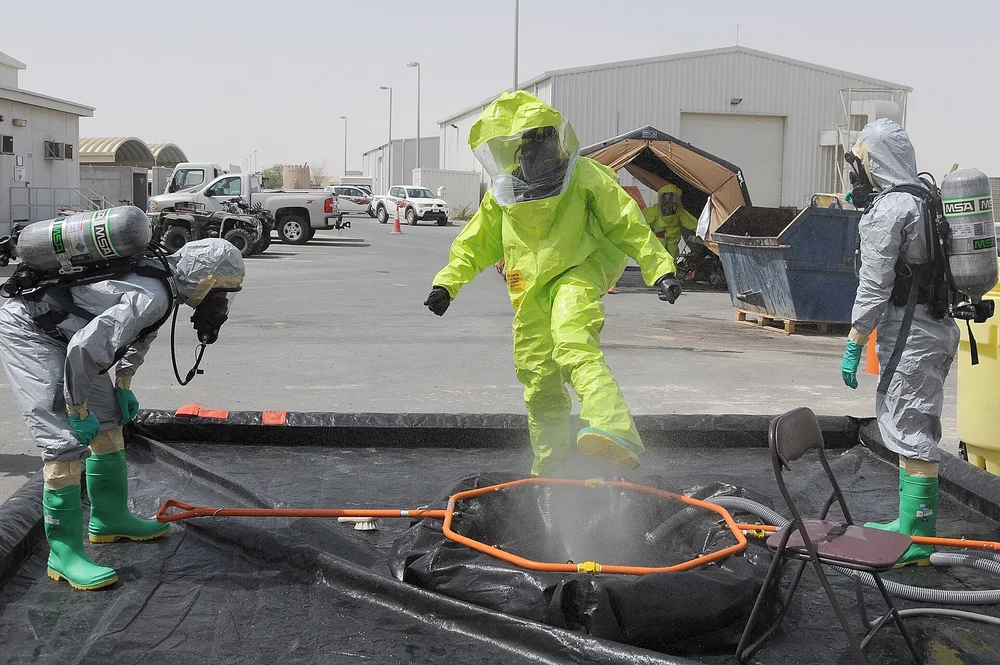
Photo: U.S. Air Force, public domain, via Wikimedia Commons
How biological material travels through a room
After death, the body gradually releases fluids. Gravity does the rest. Whatever the person was resting on absorbs that fluid first, and once it is saturated, the fluid keeps moving down and outward.
A typical path looks like this, from top to bottom:
- Bedding and the mattress top. Fabric and foam absorb quickly and hold a great deal.
- Box spring, bed frame or chair base. Fluid passes through and can drip to the floor below.
- Carpet and pad. Carpet wicks material sideways, so the stain on the pad is often wider than the one on top.
- Tack strip and subfloor. Plywood and OSB are absorbent. Fluid can run along seams between panels.
On hard flooring such as vinyl plank or laminate, material tends to slip into the gaps between boards and spread underneath, which means the top can look clean when the underside is not.
Why surface cleaning does not work
People often try to scrub the visible area, sometimes with good intentions and a lot of bleach. It rarely helps, for three reasons.
- The material is below the surface. Cleaning the top of a carpet leaves the pad and subfloor untouched. The odor and contamination stay with them.
- Liquid cleaners push it further. Adding water or chemicals to a soaked area can carry material deeper and wider.
- Disinfectants need contact. EPA-registered disinfectants only work as labeled when they can reach a cleaned, accessible surface. They cannot reach material sealed inside foam or under flooring.
This is why decomposition cleanup is mostly a removal job. The cleaning and disinfecting happen after the absorbent layers are gone and the hard surfaces underneath are exposed. Our guide on the limits of household cleaning explains this in more depth.
What we look for during the assessment
The assessment is about tracing the path. A technician checks:
- The outer edge of staining on the carpet, then lifts a corner to compare the pad.
- Whether the mattress and box spring, or the chair or sofa, have soaked through.
- Seams in hard flooring and the condition of baseboards nearby.
- Whether fluid reached a floor register, a wall cavity or the ceiling below on upper floors.
- Whether odor has settled into nearby soft furnishings, closets or drapes.
We then write a scope that lists each material and what will happen to it. You can read more about this step in How Professionals Assess Affected Rooms and Materials.
How decomposition cleanup proceeds
Set up the work area
The room is isolated from the rest of the home and a clear path out is protected so material is not tracked through hallways.
Remove soft furnishings
Mattress, bedding, upholstered pieces and similar items that absorbed material are wrapped and bagged in the room before being carried out.
Lift flooring layers
Carpet, pad and tack strip are cut out past the edge of contamination. On hard flooring, affected boards are taken up.
Address the subfloor
If the subfloor is stained but sound, it is cleaned, disinfected and may be sealed. If material has soaked deeply, the section is cut out so a contractor can replace it.
Clean and disinfect
Exposed hard surfaces, walls near the area and anything being returned are cleaned and treated with EPA-registered disinfectants according to label directions.
Deodorize and document
With the source removed, remaining odor is treated. You receive photos of each stage and an itemized invoice.
What usually goes and what can stay
Often cleaned and kept
- Metal bed frames and hardware
- Solid wood or sealed furniture not in direct contact
- Glass, ceramics and most hard objects
- Items stored in closed drawers away from the area
- Hard floors that were sealed and not penetrated
Usually removed
- Mattress and box spring
- Upholstered chair or sofa involved
- Carpet, pad and tack strip in the affected area
- Bedding, pillows and nearby fabrics
- Laminate or vinyl boards with material underneath
Removed material is packaged and disposed of in line with applicable Tennessee and federal requirements. Tennessee treats medical waste as a special waste, which is one reason it should not simply go out with household trash. For a fuller explanation, see What Happens to Contaminated Porous Materials.
Before we arrive
Leave the room as it is. Close the door, keep pets out, and if it is simple to do, switch off any fan blowing toward the area. Please do not move the mattress or pull up carpet yourself. Besides the health reasons, doing so spreads material onto clean areas and can make the job larger. If you need to take photos for an insurer, take them from the doorway.
What shapes the scope
The written scope depends on how far material traveled, which is driven by the length of time before discovery, the type of furniture and flooring, the room temperature and the layout of the space. A single bed on a carpeted floor is a different job from a recliner on hardwood over a crawl space. Access and the amount of material for disposal also matter. See How Biohazard Cleanup Pricing Is Determined for the general approach, or our pricing page.
Questions people ask
How soon after death does decomposition affect the home?
It varies with temperature, humidity and the person's health, but material can begin reaching furnishings within a few days. Warm rooms speed this up. Because there is no reliable rule, we judge each case on what we find rather than on the timeline alone.
Can a mattress be cleaned after decomposition?
No. Foam and fabric absorb fluid deep inside where no cleaner or disinfectant can reach. The mattress, box spring and bedding are removed and disposed of as contaminated material.
The stain looks small. Why do you need to remove so much carpet?
Carpet wicks fluid sideways, and the pad underneath usually shows a wider area than the top. We cut beyond the edge of contamination so nothing is left at the margins to keep producing odor.
Will you have to cut out the floor?
Only if material has soaked into the subfloor deeply enough that cleaning and sealing will not address it. When that happens, we remove the affected section and tell you that a contractor will need to replace it.
Is it safe to stay in the rest of the house?
Generally other rooms are fine to use as long as the affected room stays closed and air is not being pushed from it into the rest of the home. If you have concerns about a vulnerable household member, ask us on the phone.
Sources
Not sure how far it has spread?
Call (615) 513-5112 and describe the room. We will tell you what to expect and arrange an assessment.

