Why Professional Biohazard Cleanup May Be Necessary
Professional biohazard cleanup is not always necessary. A small, fresh spill on a hard surface is something many households can handle by following public-health guidance. It becomes the safer choice when contamination has soaked into soft materials, spread across rooms, sat for a while, or followed a death, crime or serious injury, or when the job is simply too painful for the people closest to it.
This guide offers a way to make that decision honestly, covering health, hidden damage, waste handling, insurance and emotional cost, so you can choose with clear eyes rather than under pressure.
If you are struggling after a loss, you can call or text 988 to reach the 988 Suicide & Crisis Lifeline, or chat at 988lifeline.org.
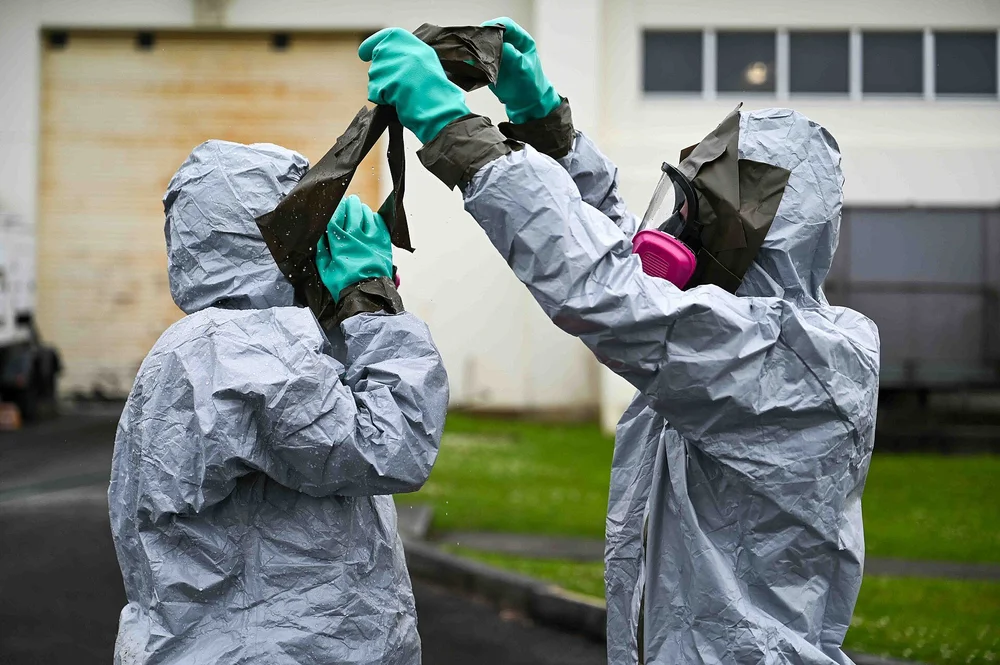
Photo: U.S. Air Force, public domain, via Wikimedia Commons
The honest answer: sometimes you do not need us
A cleanup company telling you that you might not need a cleanup company may sound odd. It is still the truth, and you deserve it. Everyday household accidents, a child's scraped knee or a shaving cut, produce small amounts of blood on surfaces that can be cleaned. Public-health agencies publish guidance for exactly these moments, and following it is reasonable.
What changes the picture is not the word "biohazard" on its own. It is a combination of factors: the volume of material, the kind of surface it reached, how long it has been there, how far it traveled, and what happened to cause it. A useful way to think about the decision is to ask four questions, one after another, which the next section lays out.
Four questions that settle most decisions
Did it reach anything soft or absorbent?
Carpet, rugs, mattresses, couches, curtains, clothing piles and unfinished wood take fluid inside, where wiping cannot reach. If the answer is yes, a household clean will almost always leave material behind.
Can you see the edges of it?
If you can see where the contamination begins and ends, and it sits on a single sealed surface, the job is contained. If it disappears under furniture, along a baseboard, through a floor seam or into another room, it is larger than it looks.
Has it been there for more than a short while?
Time lets fluid travel and dry. Dried material can flake loose when disturbed. A situation discovered days or weeks later also tends to involve odor and wider spread.
Is it connected to a death, crime or serious injury?
These events tend to involve more material, more rooms, and an emotional weight that is unfair to place on a grieving family. They may also involve police or a medical examiner, which affects timing and access.
If every answer is no, you are likely looking at a small household cleanup. If any answer is yes, a professional assessment is worth at least a phone call. Calling does not commit you to anything.
Common situations and where they usually land
Real events rarely match a checklist neatly, so here are some everyday examples and how they tend to sort out. These are general patterns, not rules. A phone conversation can confirm where your situation fits.
| Situation | Usually | Why |
|---|---|---|
| A nosebleed on bathroom tile, cleaned up within the hour | Household | Small, fresh, on a sealed surface with visible edges |
| A kitchen knife cut that dripped onto a laminate counter and the floor nearby | Household, with care at the floor seams | Mostly hard surfaces; check that nothing ran into gaps |
| A fall at home with a head wound, blood on carpet in a hallway | Professional | Soaked into carpet and pad, likely tracked by responders |
| A relative found days after dying alone at home | Professional | Time, spread into flooring and furniture, odor, and emotional weight |
| An assault or shooting inside a rental unit | Professional | Police involvement, multiple surfaces, landlord documentation needs |
| Blood found in a vehicle after an injury | Professional | Foam seats, fabric and tight channels are hard to reach |
| A workplace injury on a warehouse floor | Often professional | Employee exposure raises OSHA considerations for the employer |
Notice that the line is rarely about how frightening a situation sounds. A large amount of blood on a single sealed floor can be simpler than a modest amount that reached a mattress. Equally, a small stain in the room where a parent died may be something you simply do not want to face, and that alone is a valid reason to ask for help.
If an incident involved a traumatic injury, our page on cleanup after a traumatic injury describes the work. When the person was not found for some time, unattended death cleanup is the closer fit.
Health reasons, explained without alarm
Human blood and certain body fluids can carry bloodborne pathogens. The CDC identifies hepatitis B, hepatitis C and HIV as three of the most common. Infection happens through specific routes such as sharp injuries or fluid contact with broken skin, not by being near the area.
That is why the health case for professional cleanup is not about fear. It is about exposure during the work itself. Cleaning a large or soaked area means kneeling in it, cutting materials, lifting heavy and wet items, handling debris that may hide sharp objects, and doing it for hours. Each of those steps creates chances for contact that a small wipe-up does not.
Workers who face this kind of exposure on the job are covered by OSHA's Bloodborne Pathogens Standard, 29 CFR 1910.1030. It requires employers with occupationally exposed staff to have a written exposure control plan, provide personal protective equipment, train employees and offer the hepatitis B vaccination. A family member stepping in has none of that structure. That contrast is the clearest way to see why the work is usually handed off.
If anyone does get blood in a cut, eye or mouth, the CDC's first-aid guidance is to wash or flush the area with water and seek medical advice promptly. A doctor can assess whether any follow-up is needed.
Disposal rules most households do not know about
Getting contaminated material out of the house is its own problem. Bagging a soaked mattress for the curb may feel like the end of it, but heavily contaminated debris is not ordinary household trash.
Guidance from the Tennessee Department of Environment and Conservation lists medical waste among "special wastes" and says it is generally prohibited from solid waste processing or disposal facilities unless treated to render it non-infectious. Sharps are expected to be packaged securely in puncture-proof containers. OSHA, for its part, defines regulated waste to include items that would release blood if compressed, and items caked with dried blood that could release it when handled.
Those rules exist to protect sanitation workers and the public. A professional team packages this material on site and disposes of it in line with applicable Tennessee and federal requirements, so the burden of figuring out where it can legally go does not fall on you.
The emotional cost is a real reason
Many people who call us could physically do some of the work. What they cannot do, and should not have to, is clean the place where someone they loved was hurt or died.
Families sometimes feel they ought to handle it themselves, out of duty, privacy or worry about cost. It is worth hearing plainly: choosing not to do this work is not a failure of love or responsibility. The images and memories created by cleaning a scene can stay with a person for a long time. Handing that part to people who do it routinely lets you focus on the things only you can do, such as arranging services, caring for children, or simply resting.
If you are carrying more than you can manage
Grief after a sudden or violent death can be overwhelming. If you or someone close to you is thinking about suicide, call or text 988, or chat at 988lifeline.org. If you have been harmed by someone in your home, the National Domestic Violence Hotline is available at 1-800-799-7233.
Friends and neighbors often offer to help. If they want something to do, point them toward meals, errands, or sitting with you, rather than toward the affected room.
Property value, tenants and insurance considerations
Beyond safety, there are practical financial reasons to have the work done and documented properly.
Documentation for insurance
Some property insurance policies may cover some of this work. Whether yours does depends entirely on the policy and the insurer. Insurers typically want to see what happened and what was done. A professional cleanup produces photos, a written scope and an itemized invoice that you can give to your insurer. A weekend of scrubbing produces none of that. Consumer guidance from the National Association of Insurance Commissioners recommends notifying your insurer promptly and photographing damage, which is easier to do before anything is thrown away.
Rentals and resale
Landlords need a unit that can be safely re-let, and sellers need a property that will not surprise an inspector. Incomplete remediation can come back as a complaint, a delayed lease, or a negotiation point. Our landlord biohazard cleanup service and the guide for rental and investment properties go deeper on this.
Workplaces
A business has an extra layer to consider. If an employee is asked to clean up blood, OSHA's standard may apply to that task. Many employers prefer to bring in an outside team rather than expose staff. See workplace biohazard cleanup for how that usually works.
What a professional team actually brings
It helps to be specific about the difference, rather than relying on a vague promise of expertise. A professional crew brings:
- A method. A set order of work: assess, isolate, remove, clean, disinfect, deodorize, dispose, document.
- Protective equipment matched to the job, from gloves and eye protection to full suits and respirators where the situation calls for them. Our guide to cleanup equipment and PPE explains what each item is for.
- Tools for removal, so contaminated carpet, pad and sections of drywall or subfloor can be cut out cleanly rather than torn up.
- EPA-registered disinfectants used according to label directions and contact time.
- Packaging and a disposal route for contaminated waste.
- Distance from the event. The crew did not know the person involved, which lets them work steadily through a task that would be crushing for family.
- A paper trail for insurers, landlords, property managers or estate administrators.
What a cleanup company generally does not bring is reconstruction. Replacing drywall, flooring or paint is usually a contractor's job, and we will tell you if your project will need one.
Well-meant moves that make the job harder
When something terrible happens at home, the instinct is to fix it fast. A few common reactions can unintentionally spread contamination, destroy insurance evidence or add cost.
Helpful while you wait
- Keep people and pets out of the area
- Close the door to the room if you can
- Take a few photos from the doorway for your records, if you feel able
- Call your insurer to report what happened
- Write down questions as they come to you
Better to avoid
- Throwing out furniture or belongings before speaking with your insurer
- Renting a carpet shampooer or steam cleaner
- Running fans or the HVAC system into the area, if that is easy to avoid
- Covering the area with rugs, paint or air freshener
- Asking a friend or relative to clean it for you
Our separate guide on what not to do before an assessment goes through each of these in more depth.
How to choose help once you decide to call
If you decide a professional is the right call, a few straightforward questions will tell you a lot about any company, including ours.
- Will someone assess the site and give me a written scope before major work begins?
- How do you decide what gets removed and what gets cleaned?
- How is contaminated waste packaged and disposed of?
- What documentation will I receive afterward?
- Who handles repairs, and will you tell me if I need a contractor?
- What do you need from me before you start, such as police release or keys?
Be cautious with anyone who gives a firm price without seeing or hearing about the job, promises that insurance will pay, or pressures you to sign on the spot. A fuller list appears in questions to ask before hiring a biohazard cleanup company, and you can read how our own estimates work on the pricing page.
Arranging help in Middle Tennessee
Nashville 24/7 Biohazard Disposals is one team based in Nashville that travels out to homes, rentals, businesses and vehicles across Middle Tennessee, from Davidson and Williamson counties to Montgomery, Sumner, Rutherford and the surrounding counties listed on our service areas page. You can call any time, day or night. Scheduling for any location is confirmed by phone, and distance can affect timing.
If police or the medical examiner were involved, they will need to release the property before any cleanup begins. Once they have, you can call us, send a message, or start an order online.
Making the call that is right for you
A small, fresh spill on a hard surface is usually something a household can clean using public-health guidance. Contamination that soaked into soft materials, spread out of sight, sat for a while, or followed a death, crime or serious injury is a different job. It carries more exposure during the work, more hidden damage, and disposal rules most people never encounter.
Professional cleanup also protects things beyond health: insurance documentation, the condition of a rental or a home you may sell, and your own wellbeing. You never have to justify choosing not to clean up after someone you love. If you are unsure which side of the line you are on, describe the situation on the phone. That conversation is free, and an honest answer may be that you can handle it yourself.
Questions people ask
Is it illegal to clean up blood or a death scene myself in Tennessee?
We are not aware of a general rule that stops a homeowner from cleaning their own property once police have released it. The constraints are practical: exposure during the work, and the fact that heavily contaminated waste is not ordinary trash under Tennessee waste guidance. If you have a legal question about a particular situation, an attorney is the right person to ask.
Can a regular house cleaner or carpet company do this work?
Standard cleaning services are set up for everyday dirt, not for biological contamination. They typically do not remove and dispose of soaked materials or follow a decontamination sequence. Our guide comparing biohazard cleanup and standard restoration explains the differences.
Will calling you commit me to paying for anything?
No. A phone call is a conversation about what happened and what the job may involve. Work is based on a written scope after an assessment. If you choose to order online, that page involves a $2,000 initial deposit, which is not the final price.
My relative offered to clean it to save money. Is that a bad idea?
It is a generous offer, and for a small spill on a hard surface it may be fine. For anything soaked into soft materials, spread across rooms, or connected to a death, it exposes them to blood during the work and to an experience that can be hard to forget. It also tends to miss hidden contamination.
I already cleaned part of it. Is it too late to call?
Not at all. Tell us what was done and with what products. We will check the areas that were cleaned as well as the ones that were not, since material is often pushed into seams or carpet during a first attempt.
Do you handle cleanups in vehicles?
Yes. Cars and trucks have foam, fabric and narrow gaps that make them hard to clean thoroughly. See vehicle biohazard cleanup for what is involved.
Who decides when it is safe to go back into the room?
If police or the medical examiner are involved, they decide when the scene is released. After that, we will tell you when our work in the area is finished and what, if anything, still needs a contractor before the room is back in normal use.
Sources
Not sure whether you need professional help
Call (615) 513-5112 and describe what happened. We will give you a straight answer, even if that answer is that you can handle it yourself.