What Happens During Decomposition Cleanup
Decomposition cleanup is the removal of fluids, residue and odor left after a person has died and was not found for some time. It works from the inside out: technicians find every material the fluids reached, remove what cannot be cleaned, disinfect what can, and treat odor only once its source is gone.
This guide explains, without graphic detail, why household materials are affected the way they are, what happens at each stage of the job, how odor is handled, and when structural materials such as subfloor or drywall come into it.
If you are coping with a loss like this and feel overwhelmed, you can call or text 988 at any hour to talk with someone.
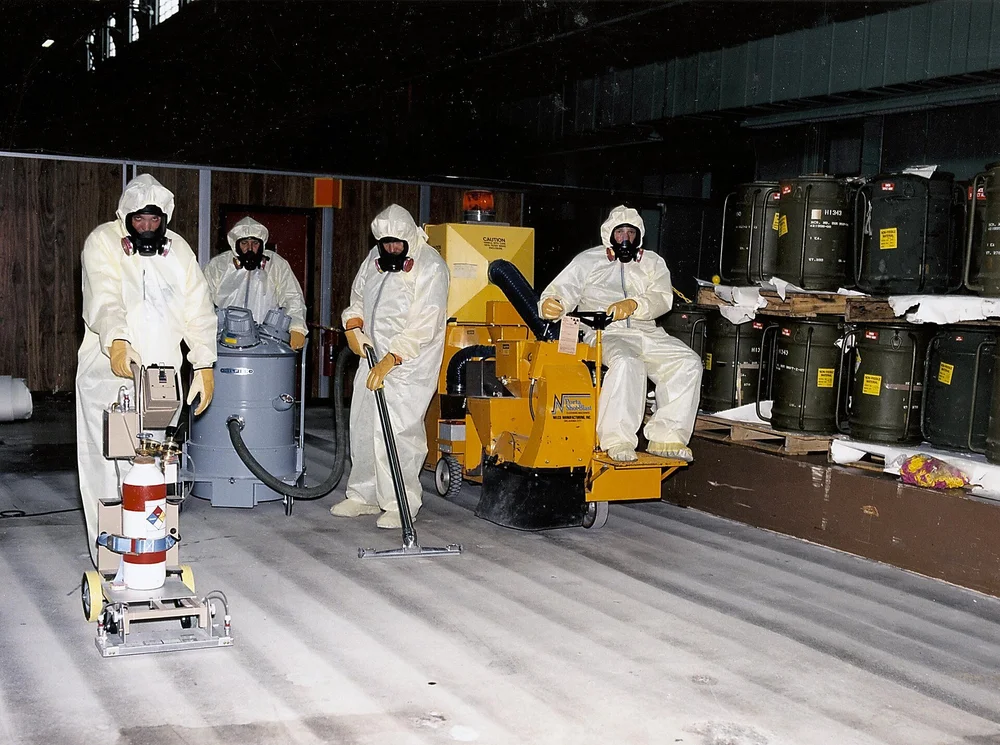
Photo: U.S. Department of Energy, public domain, via Wikimedia Commons
Why materials are affected: the non-graphic science
After death, the body's natural processes continue for a while and then the body gradually breaks down. Part of that process involves the release of fluids, along with gases that carry odor. None of this is unusual. It happens to everyone, and it is the reason funeral homes and medical examiners work promptly.
What matters for cleanup is how those fluids and gases interact with a home. Three simple ideas explain most of what technicians see.
Liquids move downward and outward
Fluids follow gravity. They soak into whatever the person was resting on, then into the next layer down, such as a mattress into a box spring, or carpet into pad and then floorboards. They also wick sideways through fibers and along seams.
Porous materials hold on
Porous materials, such as fabric, foam, carpet pad, unsealed wood and drywall paper, are full of tiny spaces. Fluids fill those spaces and cannot be fully reached by surface cleaning. That is why porous items are usually removed rather than cleaned.
Odor travels with air
Odor molecules move through the air and settle into soft furnishings, clothing, curtains and even some building materials in nearby rooms. Air currents from open doors, fans or the HVAC system can carry them further.
What determines how far the effects reach
Two homes with the same time before discovery can need very different amounts of work. These factors explain why.
| Factor | Why it matters |
|---|---|
| Time before discovery | More time usually means fluids reach deeper layers and odor spreads further |
| Indoor temperature and humidity | Warmth generally speeds natural processes; heating or summer heat in a closed home has a large effect |
| Surface the person was on | A tiled floor, a bed, a recliner and a carpeted floor each lead to a different scope |
| Floor construction | Wood subfloor over a crawl space, concrete slab and upper-floor framing each behave differently |
| Airflow | Running HVAC, fans or open interior doors can spread odor into other rooms and ductwork |
| Insects | Their presence can widen the area that needs attention and cleaning |
An experienced assessment considers all of these together, which is why we do not give scope or price estimates before seeing the property.
The stages of a decomposition cleanup
The work moves in a deliberate order. Each stage prepares for the next, and doing them out of order tends to waste effort or leave odor behind.
Release and access
The medical examiner and police release the property. The owner or whoever controls it arranges access, whether in person or by key.
Assessment and mapping
A technician identifies the primary area and traces where fluids and odor have travelled: across the floor, into furniture, under baseboards and, where relevant, into adjoining rooms or ductwork. The result is a written scope.
Containment
The work zone is sealed off from the rest of the home, often with plastic sheeting and a controlled entry point, so that nothing is tracked or blown into clean areas. The HVAC system may be shut off or isolated. Our article on access and containment explains why.
Removal of contents
Affected soft furnishings, such as mattresses, upholstered chairs, bedding and rugs, are packaged and removed. Hard items are moved aside for cleaning.
Removal of affected building materials
Carpet and pad are cut out. Where fluids have reached flooring, subfloor, baseboard or the lower part of drywall, those sections are removed back to clean material.
Cleaning and disinfection
Exposed structure and remaining surfaces are cleaned, then treated with EPA-registered disinfectants used according to label directions, including their required contact time.
Odor treatment
With the source gone, residual odor in the air and remaining materials is treated. This may include sealing cleaned structural wood so that any trace odor is locked in.
Waste and documentation
Contaminated material is packaged and disposed of in line with applicable Tennessee and federal requirements. You receive photos, the written scope and an itemized invoice.
Floors, subfloor and slab: where most of the work happens
Floors are usually where the scope grows, because fluids collect there. How much has to come out depends on what the floor is made of.
Carpet and pad
Carpet pad acts like a sponge. Even when the carpet surface looks limited, the pad beneath is often affected over a wider area. Carpet and pad in the affected zone are almost always removed. Our carpet and subfloor cleanup page covers this in detail.
Hardwood and laminate
Sealed hardwood resists fluids on its surface, but seams between boards let liquid through. Laminate and many engineered floors have a fiberboard core that swells and holds fluid. Affected boards are typically lifted so the subfloor can be inspected.
Wood subfloor
Plywood or OSB subfloor is porous. If fluids reached it, the affected section is either cut out and replaced by a contractor later, or, where the effect is shallow, cleaned, disinfected and sealed. The assessment determines which.
Concrete slab
Concrete is porous too, though less so than wood. Slabs are cleaned and disinfected, and may be sealed to lock in any trace odor before new flooring goes down.
Tile and vinyl
Glazed tile and sheet vinyl resist fluids on their surface, but grout lines and seams can let liquid reach the layer beneath. Tile may be cleaned in place or removed depending on what lies underneath.
Walls, baseboards and other structural materials
Drywall is gypsum wrapped in paper. The paper face and the gypsum core both absorb liquid. When fluids have wicked into the lower part of a wall, that section is cut out, typically in a straight line above the affected height so a contractor can patch it cleanly later. Baseboards and door casings, often made of unsealed wood or MDF, are usually removed in the affected area.
In some cases, fluids reach framing such as joists or wall studs. Solid framing lumber can often be cleaned, disinfected and sealed rather than replaced, because removing structural members is a much larger undertaking. Where structure is involved, we will explain what we found and whether a contractor or structural professional should look at it.
Removal is not rebuilding
Cleanup ends with a clean, disinfected structure. Replacing subfloor, drywall, trim and flooring is generally a contractor's job. We will tell you during the assessment if your project will need one, so you can line one up.
Furniture and contents in and around the affected area
Contents fall into three broad groups.
- Directly affected porous items, such as the mattress, recliner, sofa or rug where the person was found. These are packaged and disposed of; they cannot be safely returned for use.
- Hard items in the affected room, such as dressers, lamps, picture frames and electronics casings. Many can be cleaned and disinfected. Some may hold odor in unfinished backs or drawers.
- Soft items elsewhere, such as clothing in a closet or curtains in a nearby room. These may carry odor without being contaminated. Laundering or professional cleaning is often enough, though heavily odor-affected items may not be recoverable.
If a piece matters to your family, tell us before work begins. The furniture and material assessment page and our guide to contaminated porous materials explain how these calls are made.
How odor is actually removed
Odor is the part of decomposition that families find hardest, and the part most often handled badly by well-meaning people. The principle is simple: odor comes from a source, and it does not go away until that source is removed.
Source removal comes first
Every contaminated porous material that holds residue keeps releasing odor. The removal stages above are themselves the most important part of odor control.
Then the air and surfaces
Once the source is gone, the room and nearby spaces are treated. Depending on the job, this can include air filtration, cleaning of surfaces in adjoining rooms, and treatments matched to the materials involved.
Then sealing
Cleaned structural materials such as subfloor or framing may be coated with a sealing primer. This locks any remaining trace odor into the material before new flooring or drywall covers it.
What not to rely on
Air fresheners, scented candles and coffee grounds only mask odor. Ozone generators are sometimes promoted for odor, but the EPA says ozone can damage the lungs, has little potential to remove indoor contaminants at safe concentrations, and should not be used where people or pets could be exposed. Our odor remediation page and the guide to remediation and odor go further.
When heating and cooling systems are involved
If the HVAC system ran while the person was undiscovered, it may have pulled odor through return vents and pushed it into other rooms. This is one reason the assessment looks at the whole home, not just the primary room.
Common steps include shutting the system off during the work, sealing vents in the work zone, replacing filters, and cleaning accessible vent covers and registers. If odor appears to have settled deeper in ductwork, we will say so. Duct cleaning or HVAC servicing is often a separate trade, and we can point out when it may be worth involving one.
Before we arrive, if it is easy and safe to do so, avoid running the system or fans in a way that pulls air from the affected room. Do not open the system or remove filters yourself.
Safety measures and why they matter here
Decomposition fluids are bodily fluids. OSHA's Bloodborne Pathogens Standard treats all body fluids as potentially infectious in situations where it is difficult or impossible to tell them apart, and blood can carry pathogens such as hepatitis B, hepatitis C and HIV according to the CDC. That is why the work is done with full protective equipment, controlled entry and exit, and careful handling of waste.
Protective equipment for this kind of work typically includes disposable coveralls, gloves, eye protection and appropriate respiratory protection, as well as boot covers. Our article on cleanup equipment and PPE describes each item.
Waste is handled carefully too. Under Tennessee rules, medical waste is a special waste that is generally kept out of ordinary solid waste facilities unless treated to be non-infectious, according to TDEC guidance. Contaminated material is packaged and disposed of in line with applicable Tennessee and federal requirements.
What to do, and not do, before the crew arrives
Helpful
- Keep the door to the affected room closed
- Keep people and pets out
- Avoid running fans or HVAC through the area if that is easy
- Note any valuables or documents you know are nearby
- Call your insurer to report the loss, if you have coverage
- Arrange key access if you cannot be there
Leave these to the crew
- Trying to clean or remove anything from the affected area
- Throwing away furniture before speaking to your insurer
- Running ozone machines or foggers
- Painting or sealing over affected areas
- Pulling up carpet to look underneath
- Spraying household disinfectants or bleach on large areas
Our guide on what not to do before an assessment covers these in more detail.
When someone has already tried to clean
Sometimes a relative, a landlord's maintenance worker or a general cleaner has already attempted to deal with the area before a professional is called. That is understandable, especially when the odor is strong or a property needs to be ready quickly. It does change what the assessment looks for.
Common situations we see include carpet that was shampooed but left in place, a mattress removed while the box spring or floor beneath stayed, walls painted over, or heavy use of fragrance or bleach. In each case the visible surface may look better while the source remains below. Odor that comes back on a warm day, or after the HVAC system runs, is a typical sign.
If this applies to your property, tell us what was done, roughly when, and with what products. You will not be judged for it. The information helps the technician decide where to open up flooring or walls, and whether cleaning products already used might react with anything else. If anyone who helped had direct contact with fluids and has health concerns, they should speak with their doctor.
The limits of household cleaning guide explains why surface methods so often fall short in these situations.
How long the work takes
There is no standard duration. A contained job involving one piece of furniture and a small floor area is very different from one that involves subfloor removal across a room and odor treatment in adjoining spaces. Distance from our Nashville base and access to the property also affect scheduling. The written scope will give you a realistic sense of the work involved, and we confirm scheduling by phone.
Odor treatment can sometimes continue after the main removal and cleaning are finished, because some treatments need time to work. If that applies to your property, the scope will say so.
Cost, insurance and documentation
Pricing is based on a written scope after an assessment. In decomposition cleanup, the largest cost factors tend to be how much flooring and structure must be removed, whether odor has spread through the home, the amount of waste generated, and access to the property. Our pricing page explains how these factors are combined.
Some homeowners and property insurance policies may cover some of this work, but that depends entirely on the policy and the insurer. We provide photos, a written scope and an itemized invoice that you can give your insurer. When you are ready to schedule, the Order Online page involves a $2,000 initial deposit. It is not the final price and does not mean work begins within a particular time.
Decomposition cleanup in a few sentences
Fluids move down and outward, porous materials hold them, and odor rides on air. Decomposition cleanup follows that logic in reverse: map where everything went, contain the area, remove porous contents and affected building materials, clean and disinfect what remains, then treat and seal for odor. Repairs follow, usually by a contractor.
Nashville 24/7 Biohazard Disposals handles decomposition cleanup and advanced decomposition cleanup for homes, apartments and businesses across the Middle Tennessee counties we serve. Call (615) 513-5112 any time, day or night. Our guide to unattended death cleanup covers the family and medical examiner side of the situation.
Questions people ask
Why can't the subfloor just be scrubbed?
Plywood and OSB are porous, so fluids soak into the wood fibers. Shallow effects can sometimes be cleaned, disinfected and sealed. Deeper saturation usually means cutting out the affected section, because surface scrubbing cannot reach what is inside the wood.
Will we need a contractor after the cleanup?
If flooring, subfloor, drywall or trim is removed, you will generally need a contractor to replace it. We will let you know during the assessment whether that is likely, so you can plan.
Can clothes from the closet be saved?
Often, yes. Clothing that was not in contact with fluids may only carry odor, and laundering or professional cleaning usually helps. Items that were directly affected generally cannot be kept.
Is it safe to stay in other rooms of the house before cleanup?
Many people choose not to, mainly because of odor and stress. If you must stay, keep the affected room closed, keep pets out and avoid running air through the area. Do not go into the affected room.
Does a concrete floor make the job easier?
Concrete does not absorb as readily as wood, but it is still porous. It is cleaned, disinfected and often sealed before new flooring goes down. Whether that is simpler than wood depends on what was on top of it.
What is the difference between decomposition and advanced decomposition cleanup?
The terms describe how far effects have spread. Advanced decomposition usually means a longer interval before discovery, with deeper material removal and wider odor treatment. The assessment determines which applies.
Should the power and water stay on?
Yes, if possible. Electricity and water make the work easier and safer. If the home is part of an estate and utilities have been shut off, tell us when you call so we can plan around it.
Will we ever be able to use the room normally again?
Yes. Once the source is removed, the area is disinfected and sealed, and repairs are made, the room can be used as before. Many families choose new flooring or paint, which also helps the space feel fresh.
Sources
Let us map out what needs to be done
Call (615) 513-5112 at any hour once the property is released, or start through the Order Online page and we will arrange an assessment.